
“Cleared” Doesn’t Mean Recovered: What Today's Postpartum Rehab Is Missing
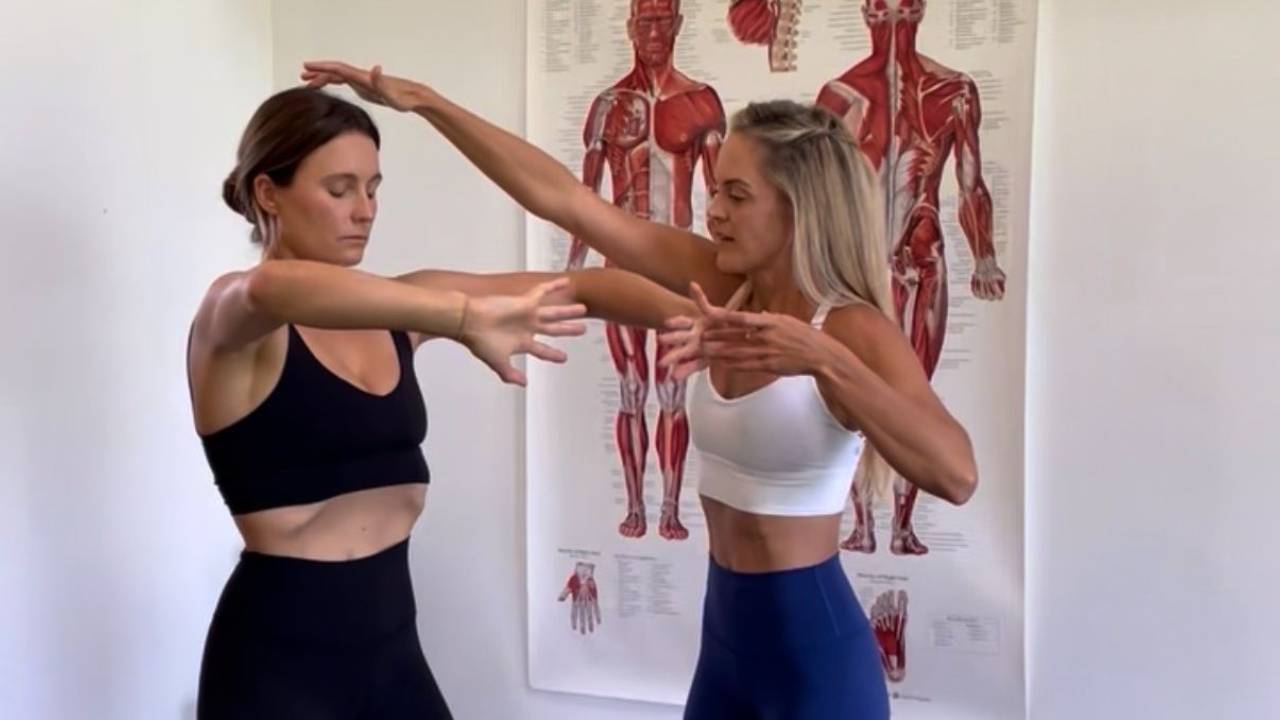
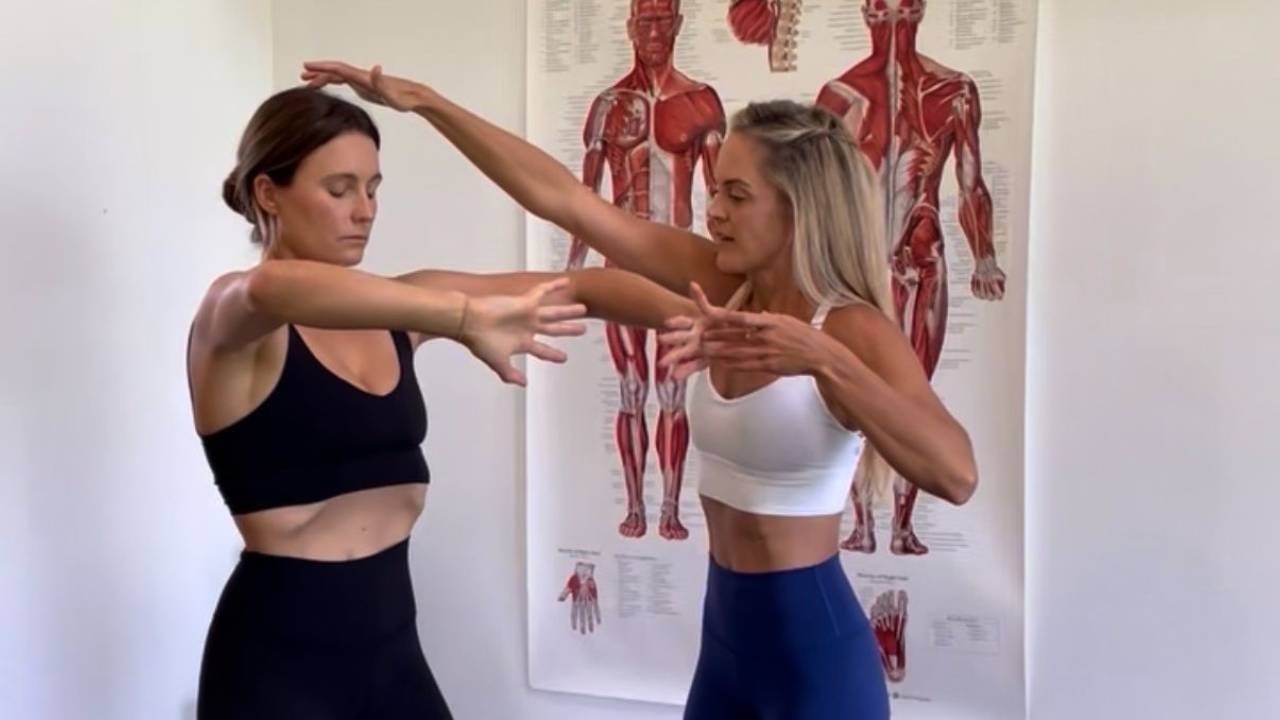
I knew there was a gap almost straight out of the gates in PT school.
A woman can grow an entire human. Her abdominal wall stretches tremendously. Her pelvic floor carries an increasing load for ten months and then, during a vaginal birth, lengthens an extraordinary amount.
Her organs shift.
Her entire pressure system changes.
Her breathing mechanics change.
Her hormones, circulation, and even her instincts reorganize around the enormous biological transition of becoming a mother.
And then, six weeks later, she hears this almost magical word: “Cleared.” Cleared for exercise. Cleared for sex. Cleared to go back to life, as though the absence of a medical complication means the body has somehow returned to its previous state.
And I remember thinking, Okay…but what happens to her organs, her pelvic floor, her abdominal wall when those systems aren’t necessarily ready to tolerate load yet, but she’s expected to carry on as usual?
“Cleared” in Western medicine and functionally restored are not the same thing.
There are wonderful OB-GYNs who recognize this and refer women to postpartum physical therapy. But many women still leave that six-week appointment without a meaningful rehabilitation plan for their core and pelvic floor.
And even women who are referred to pelvic floor PT are not always given the foundational pieces required for full restoration of the postpartum core.
I think this is what conventional postpartum care fundamentally misses:
Postpartum recovery isn’t simply about whether tissue has healed or whether a woman can perform a Kegel. It’s about recalibrating an entire pressure system.
And the beautiful part is that the body can begin responding remarkably quickly when we give it the right input. Your organs, fascia, diaphragm, abdominal wall, spine, and pelvic floor do not function as separate parts. They exist within an intelligently interconnected system where organ position, digestion, circulation, elimination, sexual function, breathing, nervous-system function, and co-regulation with your baby influence one another. The body doesn’t operate in the neat little silos that medicine often uses to conceptualize it.
So if we want to restore the postpartum core, we have to take all of those beautifully connected systems into account and give them the input they need to reorganize after the massive transformations of pregnancy and birth. And the universal force moving through—and influencing—all of them is something beautifully ordinary: Your breath.
Good thing we take roughly 20,000 breaths a day. That gives us approximately 20,000 opportunities every day to give the core better input.
But to understand why breathing matters so much, we first have to expand what we mean when we say “the core.” The core is not simply your abs. Functionally, I think of the core as essentially everything except your arms and legs: the head and neck, entire spinal column, shoulders, rib cage, abdomen, pelvis, and hips.
It includes the muscles, nerves, fascia, lymphatic structures, arteries, and veins within those regions. It also contains the organs of those regions: the brain, spinal cord, lungs, stomach, spleen, pancreas, liver, small and large intestines, kidneys, bowel, bladder, and reproductive organs.
So when we talk about “training the core,” we need to understand what we are actually training. The core is not simply a collection of muscles whose job is to make your stomach flat, bend your trunk, or stabilize your spine. It is the living container for your vital organs.
And one of the most important jobs of the core myofascia is to help maintain those organs in an optimal position for blood flow, lymphatic flow, nerve flow, and function. That piece is profoundly important—and largely absent from the way our culture talks about core rehabilitation.
If doctors, physical therapists, trainers, and mothers began thinking about the core muscles not simply as something that makes us stronger, but as a myofascial system that helps protect, organize, and support our vital organs, I think our entire perception of postpartum rehabilitation would have to change.
We would have to ask more sophisticated questions than, How quickly can she get her abs back?
We would ask:
Where is pressure going when she breathes?
What happens to her organs when she coughs, lifts, strains, or exercises?
Can her abdominal wall absorb and redistribute pressure, or does that pressure push forward through a diastasis or downward toward the pelvic floor?
Can her pelvic floor respond to pressure without gripping against it?
Can this entire system support her automatically while she lives her life?
Because pressure management is at the heart of core function.
There are three interconnected pressure chambers within this system: from the head to the epiglottis, from the epiglottis to the diaphragm, and from the diaphragm to the pelvic floor. These chambers are constantly influencing one another. When pressure increases in one chamber, the others must adapt in order to maintain balance.
And the core myofascia forms the walls of these containers. So when the pressure inside the system changes—and it changes every time we breathe, cough, laugh, lift, bear down, exercise, or move—the tissues surrounding that pressure have to respond.
This is where another major piece of conventional postpartum rehabilitation gets missed: the “core muscles” are actually more fascia than muscle tissue.
The muscles of the core are approximately 70% fascia. Of the remaining 30% that is muscle, we have voluntary control over only about 20% of the 30% that is muscle.
So that means 80% of the 30% that is muscle are slow-twitch, Type I muscle fibers—fibers characterized by slower contraction, high endurance, resistance to fatigue, oxidative metabolism, and abundant mitochondria and capillaries.
Why does that matter? Because they are designed for sustained postural support without constant conscious thought.
Contrast that with what happens when we tell a woman to Kegel or “pull your belly button toward your spine.” Those instructions predominantly ask for a conscious, voluntary contraction—the fast, deliberate, on-and-off strategy most women have been taught to associate with “using their core.”
There is absolutely a place for voluntary strengthening. But voluntary strengthening is not the same thing as restoring automatic core function. If we focus postpartum rehabilitation primarily on Kegels, abdominal bracing, and consciously activating individual muscles, we are directing our attention toward a very small fraction of the tissue and neurological behavior we are actually trying to restore.
Put another way: Conventional postpartum care attempts to consciously rehabilitate a system whose most important work is designed to happen reflexively.
That is why simply telling women to squeeze harder has never made sense to me as a complete rehabilitation strategy.
The question becomes: How do we access and rehabilitate an involuntary system?
We have to give the body input capable of eliciting an automatic, reflexive response. And two of our most powerful pathways into that system are the position of the spinal column and breathing.
This is where the breath becomes so much more than “breathwork.” Every breath creates a pressure event. Your diaphragm moves. Your rib cage changes shape. Pressure changes within your thorax and abdomen. Your abdominal wall and pelvic floor have to respond. Your fascia has to absorb, transmit, and redistribute those forces.
When this system is functioning optimally, your core doesn’t wait for you to remember to activate it. It responds automatically. That automatic response is what I call the Core Myofascial Reflex. When pressure in the abdomen increases, a healthy Core Myofascial Reflex allows the myofascial system to respond so that pressure can be absorbed and redistributed rather than simply driven through the abdominal wall or downward through the pelvic organs and pelvic floor. And because this system is primarily involuntary, we cannot expect to fully rehabilitate it through voluntary strategies alone. We can’t train an involuntary system exclusively with voluntary techniques.
We have to restore the reflex.
And that leads to the sequence that I believe, once fully integrated into our collective understanding and standard medical practices, has the potential to completely transform postpartum rehabilitation:
Breathing Mechanics → Core Myofascial Reflex → Pressure Management → Pelvic Organ Support → Optimal Function.
This is the foundation of The Core Recovery Method®.
But conventional postpartum rehabilitation often jumps toward the end of that sequence. “Okay, Mom. You’re cleared. Start strengthening.” We’re asking the body to produce more force before we’ve restored the system responsible for managing that force.
I understood that intellectually as a physical therapist. But becoming a mother made me understand it on an entirely different level. During my own pregnancy and postpartum experience, I started seeing just how much poor information women were receiving—not only online, but sometimes from highly respected doctors, fitness professionals, celebrity trainers, and influencers.
Having a baby and successfully recovering your own body does not make you an expert in rehabilitating someone else’s. A workout that feels wonderful for one postpartum woman may create excessive intra-abdominal pressure, downward pressure into the pelvic floor, doming through the abdominal wall, or compensation somewhere else in another woman.
The core isn’t simply a collection of muscles we need to “get strong again.” The core is a dynamic pressure-management system whose job is to protect the organs, support them in their optimal position, and create an internal environment in which circulation, neurological function, movement, and the rest of the body can function well.
And that realization changed the way I thought about where postpartum rehabilitation actually happens. Because postpartum rehabilitation cannot exist only on an exercise mat for twenty minutes a day.
Motherhood is the rehab.
It’s how you breathe while nursing your baby at 2 a.m. It’s how your body organizes itself when you pick her up for the 47th time that day. It’s carrying the car seat, getting off the floor, sleeping in bizarre positions, feeding, rocking, playing, lifting, walking, and living. Those moments happen thousands of times more often than any corrective exercise ever will. And luckily, there is one thing you’re doing through every single one of them: Breathing.
That’s the piece I wish every mother understood. When we restore breathing mechanics and teach the core to respond reflexively to breath and movement again, every breath becomes an opportunity to give the body better input.
And eventually, every ordinary act of motherhood becomes an opportunity for the body to practice the function we are trying to restore. You don’t have to escape motherhood in order to rehabilitate your body.
Motherhood itself is the healing.
And really, that’s what my philosophy grew out of: restore the foundation first, then teach women how to carry that function into their actual lives—not just into their workouts.
Six weeks may be enough time for your OB to determine that you’re medically cleared. But “cleared” does not mean “recovered.” And I think women deserve a real roadmap for everything that comes after that word.

