
Do I Have Diastasis Recti? A PT's At-Home Self-Test
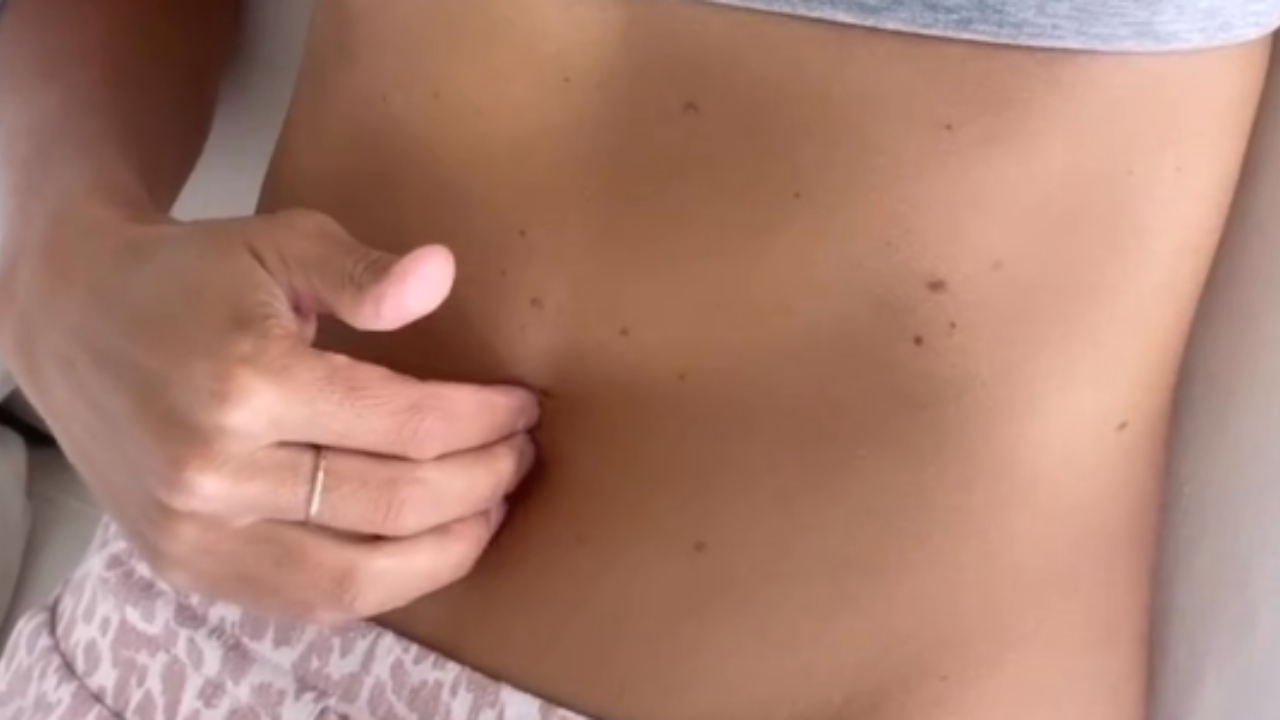

If you’ve ever looked down at your belly and wondered…
Why does my stomach still push forward?
Why does my belly dome when I sit up?
Why does my core still feel weak or disconnected—even though I’m exercising?
…you may have wondered if diastasis recti could be part of the reason.
Here’s something I wish more women were told:
Diastasis recti during pregnancy is not a failure of your body. It’s an intelligent adaptation that creates space for your growing baby.
Some degree of abdominal separation occurs in essentially every full-term pregnancy. After birth, the abdominal wall begins the process of recovering and regaining tension as your body adapts again.
But for many women, that separation—or the changes in tension and function surrounding it—persists well beyond those early postpartum months.
And this is where I want to challenge one of the biggest misconceptions about diastasis:
The width of the gap is not the whole story.
As a Doctor of Physical Therapy, I want you to know how to perform a diastasis recti self-test at home—but more importantly, I want you to understand what you’re actually feeling beneath your fingertips and what it can tell you about the way your core is functioning.
Because healing a diastasis isn’t simply about trying to make a gap smaller.
It’s about restoring an abdominal wall that knows how to create tension, manage pressure, and support you again.
So get comfortable, give yourself a few quiet minutes, and let’s check your core together.
How to Check for Diastasis Recti at Home
You don’t need special equipment to check for diastasis recti—just your fingers, a comfortable place to lie down, and a few minutes to pay attention to what your body is telling you.
- Lie on your back and completely relax your belly. Find your belly button and place your fingertips along the center of your abdomen.
- Explore your midline while you’re relaxed. Move your fingers above and below your belly button, gently pressing inward and noticing how the tissue feels beneath you.
- Gently lift your head. As your abdominal muscles engage and move toward the midline, a diastasis may become easier to feel.
- Notice both the width AND the depth. See how many fingers comfortably fit between the abdominal muscles—but don’t stop there. Pay attention to how deeply your fingers sink into the midline and how much tension you feel beneath them.
And this last piece matters because a diastasis is so much more than the number of fingers that fit inside the gap.
The quality and tension of the tissue beneath your fingers can tell us just as much—if not more—about how well your abdominal wall is functioning.
Watch the video below and follow along with me as I walk you through the self-test step by step.
View this post on Instagram
What If I Found a Gap?
A depth greater than the first knuckle and a width greater than two and a half fingers is considered a clinical diastasis.
If the space between your abdominal muscles measures greater than two and a half finger-widths, or your fingers sink deeper than your first knuckle, I consider that a clinical diastasis.
And yes—both the width and depth matter.
They give us valuable information about the integrity of your abdominal wall and how effectively your core is creating tension and support through the midline.
But I also want you to look beyond what you felt beneath your fingers, because your body gives us other clues about how that diastasis is affecting your overall core function.
Ask yourself:
- Did I see doming or coning through the middle of my abdomen?
- Did the tissue feel soft or lack tension?
- Does my belly bulge when I move or exercise?
- Does my core feel weak, unstable, or disconnected?
- Do I have back pain?
- Do I leak urine when I cough, sneeze, run, jump, or exercise?
- Do I feel pressure or heaviness through my pelvis?
- Do I struggle to feel my deep core working?
Together, these findings give us a much clearer picture of how well your core is functioning.
Because a diastasis isn’t simply something we can see or measure. It changes the way tension and pressure are managed through your abdominal wall—and understanding that is what helps us determine what your body needs next.
What If I Don't Have a Large Gap?
This is just as important.
You can have a relatively small separation—or even no obvious diastasis—and still have a core that isn’t functioning optimally.
You might notice:
- Your belly domes or pushes outward when you exercise
- Back pain
- Bladder leaks
- Pelvic pressure or heaviness
- A feeling of weakness or instability through your center
- Difficulty connecting with your deep core
- Trouble returning to running, jumping, lifting, or the activities you love
So if your self-test shows only a one-finger separation, but you’re still experiencing symptoms, don’t let that measurement convince you everything is functioning well.
The width and depth of your diastasis give us important information about the integrity of your abdominal wall. But your symptoms give us important information, too.
Your core is a pressure-management system. And when that system isn’t coordinating well, your body will often show you—through doming, leaking, pressure, pain, or a belly that pushes outward—even without a significant separation.
So don’t look at your finger measurement in isolation.
Look at the whole conversation your body is having with you.
If you’re still experiencing symptoms, there’s one more simple self-test I recommend: the cough test.
Because your body is always giving you information.
The goal is learning how to listen.
What Should You Do If You Think You Have Diastasis?
If you’ve done the self-test and think you may have a diastasis or core dysfunction, first—take a deep breath.
This is information, not a life sentence.
I know it can feel discouraging to discover a separation, especially if you’ve already been working hard to “get your abs back.” But that gap isn’t evidence that your body failed you.
Your body adapted beautifully to create space for your baby.
Now she needs the right input to restore what pregnancy changed.
And this is where I want you to resist the urge to Google “exercises to close diastasis” and start doing hundreds of ab exercises.
Because you don’t simply need stronger abs.
You need to restore the system that allows your abdominal wall to create tension, manage pressure, and support you automatically.
That’s exactly why I created The Core Recovery Method®.
Inside the program, I guide you through a step-by-step process to:
- Restore your foundation by reconnecting your breathing mechanics, deep core, pelvic floor, posture, and pressure system.
- Rebuild your strength so you can lift your kids, exercise, run, jump, and move through life without constantly worrying about your belly or your core.
- Renew your confidence so you can stop feeling disconnected from your body and start feeling strong, capable, and at home in her again.
Because postpartum recovery was never supposed to be about desperately trying to get your “old body” back.
It’s about restoring a body you understand, trust, and feel strong living in.
And yes—your diastasis can change.
Here’s what my client Rhea experienced:
“I am currently 3 months postpartum with my second baby and I am SPEECHLESS by my progress. In ONE MONTH I went from a 3 finger ab separation to 0 fingers!
This program is like no other, especially because of the hypopressive breathing techniques. I never even heard of hypopressive breathing before this program - that’s how unique it is. I tried many other programs after my first baby…but after almost a year with the other programs I was not able to close my diastasis.
I can confidently say I know this program will heal my diastasis recti along with many other issues I’m healing from - such as sciatica in my lower back, urinary urgency, hip stabilization problems, and pelvic floor pain.
On top of it, Dr. Angie is very responsive and takes her clients progress and questions very seriously! At the same time she makes you feel listened to and important. And we all know that’s hard to find virtually. So look no further, if you have been wanting to recover your core - this method is for you!”
- Rhea S.
If you just finished your self-test and thought,
“Yep. This is me.”
I want you to know something important:
You haven’t missed your window to heal.
Whether you’re three months postpartum or your baby is now in school, your body is still capable of changing.
You can restore the way you manage pressure.
You can reconnect your breath with your core.
You can improve the function of your deep abdominal wall and pelvic floor.
You can progressively rebuild strength.
And you don’t have to piece that process together on your own.
The Core Recovery Method® gives you the step-by-step roadmap to restore your diastasis from the foundation up—so you can stop worrying about your belly and start trusting your body again.
Ready to Restore Your Core?
Join The Core Recovery Method® and learn exactly what your body needs to Restore, Rebuild, and Renew—at any stage of your postpartum journey.

