
Do Squats Strengthen the Pelvic Floor?
Your back aches when you stand too long. Sharp pains shoot through your pelvis when you roll over in bed. Your hips feel tight no matter how you sit. And your low back pain gets worse as the day goes on.
Without proper posterior support from strong glutes, your body starts compensating in ways that can lead to pain, pressure, and pelvic floor dysfunction.
Squats strengthen the pelvic floor when paired with the right breathing mechanics. They can be one of the best pelvic floor exercises because they strengthen and stretch at the same time.
But there's more to it than dropping into a squat and hoping for the best.
Why Your Glutes Matter for Pelvic Floor Health
The glutes are one of the most important muscle groups in your body and a critical part of your core. Glute strength is directly linked to overall health and longevity, while glute weakness is directly linked to pelvic floor dysfunction and low back pain.
As the largest muscle group in the body, the glutes require significant blood flow and have a major influence on metabolism, movement, and support. The circulation created by active, functional glutes is vital for pelvic and core health.
Without strong glutes, the pelvic floor and core receive less blood flow. Less blood flow can contribute to ischemia and muscle spasm, which can increase intra-abdominal pressure and contribute to symptoms like back pain, prolapse, incontinence, diastasis, and other core dysfunctions.
The glutes are also responsible for moving your hips. Hip movement has a huge influence on circulation throughout the pelvis and core. Strong glutes combined with healthy hip mobility create an important foundation for a healthy core and pelvic floor.
Unfortunately, glute weakness is incredibly common today because of how much time we spend sitting. Long periods of sitting decrease blood flow to the glutes, hips, and pelvis and can inhibit one of the most important muscle groups in your body.
The good news is that your body is adaptable when you create the right environment for healing.
That’s why glute strengthening is an essential part of The Core Recovery Method® because your body doesn't work in isolated parts. Your glutes, hips, diaphragm, core, and pelvic floor are all designed to work together.
When you begin restoring glute strength and improving hip mobility, you're creating the support your core and pelvic floor need to function the way they're designed to.
How Squats Strengthen the Pelvic Floor
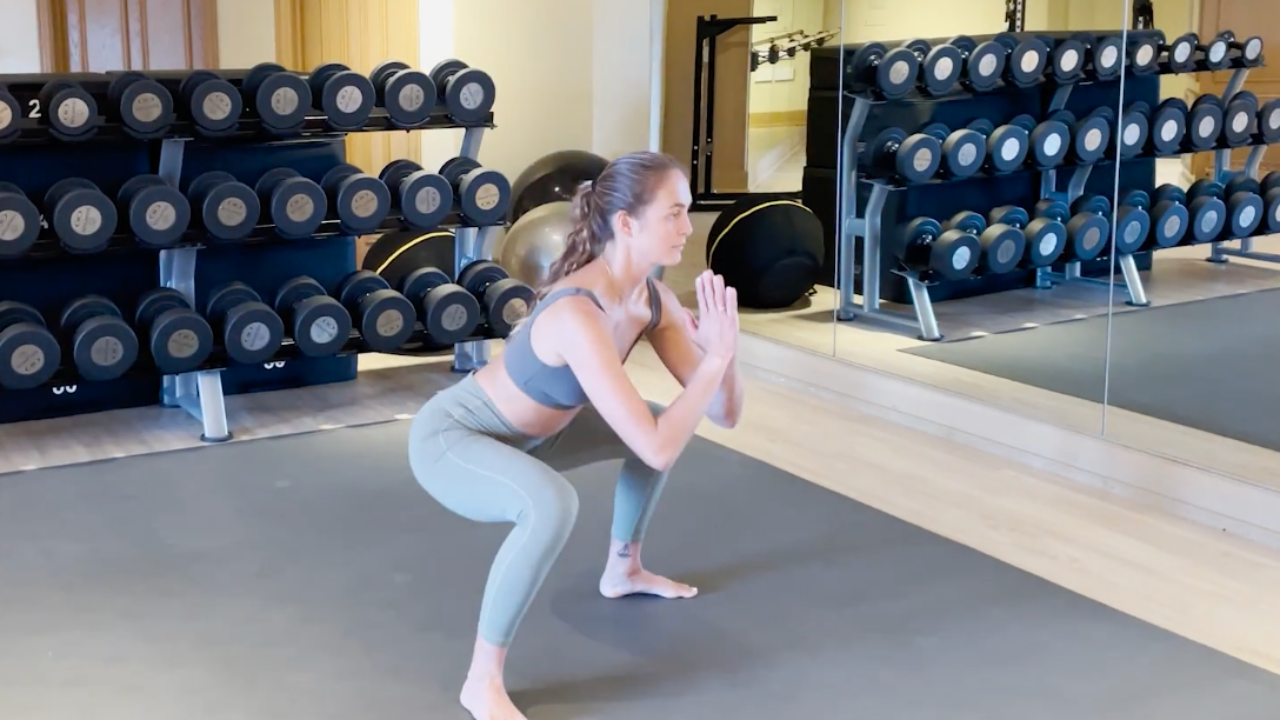
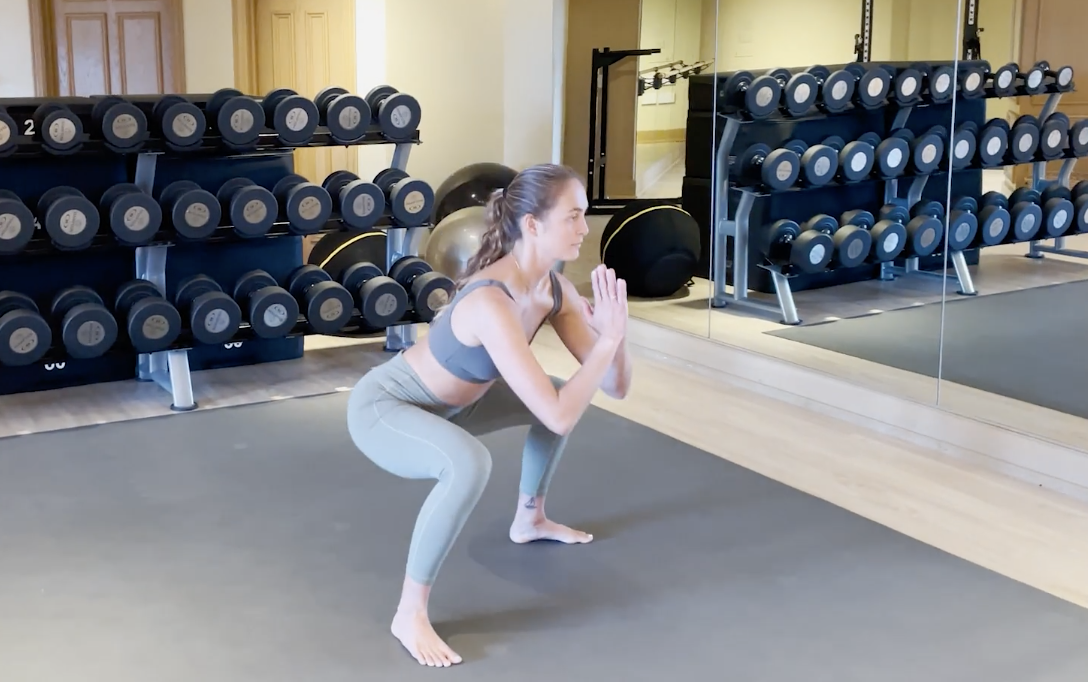
Squats are not only a glute strengthening exercise, they are a whole body exercise that builds critical functional strength and drives circulation to your pelvis. When you squat, you're building the muscles that support pelvic floor circulation, stabilize your spine, and allows for optimal hip mobility.
But squats also do something else that's especially important to your pelvic floor.
As you lower into a squat, your pelvic floor lengthens. As you rise back up, it engages.
This means a squat trains your pelvic floor to both lengthen and contract, which is exactly what a functional pelvic floor needs to do.
Think of your pelvic floor like an elevator. Most people think a strong pelvic floor means keeping the elevator up all the time, but that's not how it works.
A healthy pelvic floor waits in the "lobby" until it's needed. Then, when you cough, lift, exercise, or move, it automatically travels up to the second floor, third floor, or wherever it's needed to provide support. Once the job is done, it returns back to the lobby.
A tight pelvic floor is like an elevator that's stuck between the second and third floor. It can't move very far because it's already partially lifted. When it's triggered, it only has a small amount of movement available.
But when the pelvic floor can fully relax and return to the lobby, it has access to its entire range of motion. Then, when it's needed, it can move through multiple "floors" of support and function the way it's designed to.
That's why a pelvic floor that only knows how to clench is not a healthy pelvic floor. It needs to lengthen and relax just as much as it needs to lift and engage.
Squats help train your pelvic floor to both lengthen and lift through its fullest range of motion, making them one of the most powerful exercises for healthy pelvic floor function.
How to Strengthen the Pelvic Floor with Squats
If you squat while holding your breath, bearing down, or pushing your belly outward, that pressure is directed straight down into the pelvic floor. Over time, that excess downward pressure can contribute to leaking, feelings of heaviness, prolapse symptoms, and that low belly pooch that never seems to go away.
A simple change in how you breathe can completely change how your pelvic floor responds to a squat.
When you add decompression breathing to your squats, you help lift your organs and unload your pelvic floor while your glutes get stronger. Your pelvic floor can lengthen and strengthen without the excess downward pressure that contributes to dysfunction.
A squat performed with the right breath becomes a pelvic floor exercise.
The exact same squat performed while bearing down can become part of the problem.
Your body is intelligent and when given the right breathing mechanics and support, it knows exactly what to do.
Supporting Your Pelvic Floor Starts with Strong Glutes
Squats build the glute strength your pelvic floor depends on, improve hip mobility, and help train your pelvic floor to lengthen and lift the way it's designed to.
The key is making sure you're squatting with proper breathing mechanics that support your pelvic floor instead of straining it.
Most women have been told to do more Kegels, push through workouts, or simply accept leaking, pressure, and pain as part of motherhood. But your symptoms are not random, and they aren't something you have to live with forever.
Inside The Core Recovery Method®, you’ll learn how to restore the foundation of your core by improving breathing mechanics, reducing excess pressure, strengthening your glutes, improving hip mobility, and retraining your pelvic floor to function the way it was designed to.
You'll discover how to lift your organs, activate your core reflexively, eliminate the habits that keep symptoms coming back, and build real strength from the inside out.

