
Why Free Postpartum Workouts Aren’t Fixing Your Core & Pelvic Floor Issues
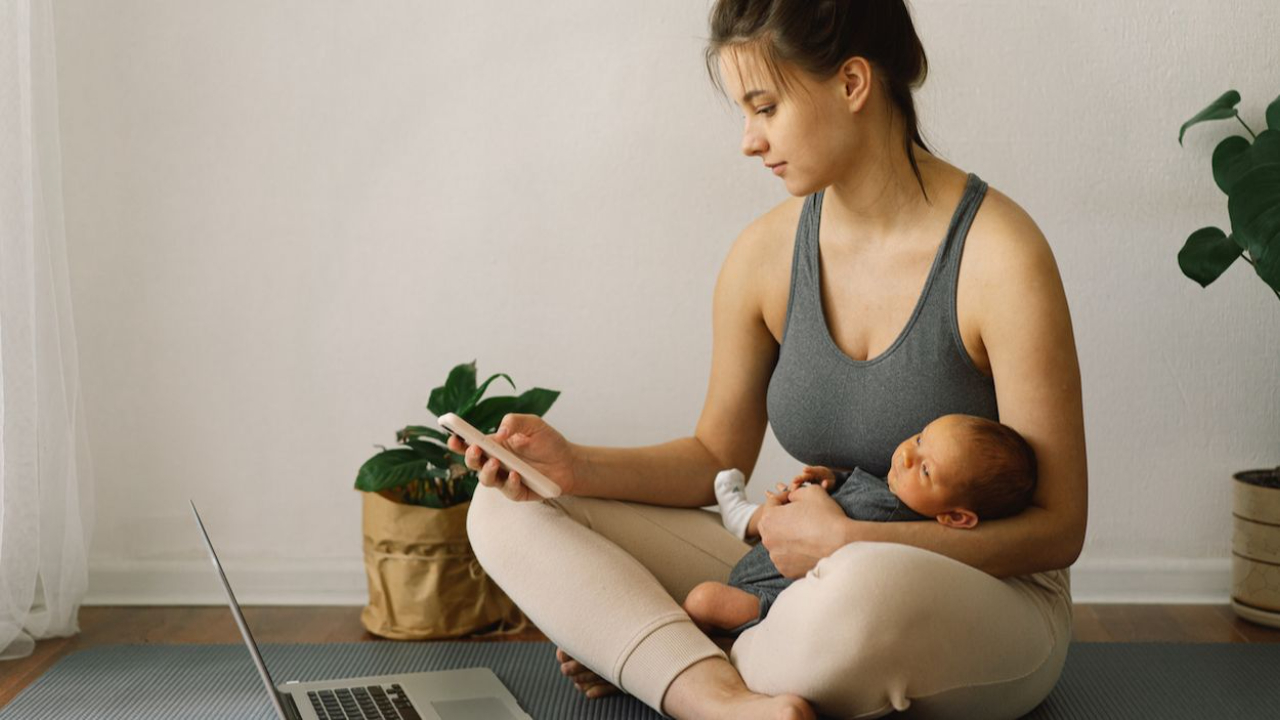

“I’ll just find some exercises on YouTube…”
You’ve probably thought about it.
Maybe you’ve even tried random core routines—bridges, dead bugs, bird dogs, or crunches. You may have added Kegels because someone told you that’s what every postpartum woman should do.
Yet here you are—still dealing with bloating, core weakness, bladder leaks, or a belly that doesn’t feel like your own… hoping the next video might finally be the one that helps.
If your belly still feels weak or disconnected, if you leak when you sneeze or run, if your back aches by the end of the day, or if you simply don’t feel at home in your body the way you did before pregnancy, I want you to hear this first:
Your body isn’t failing you.
And she doesn’t need you to work harder.
She needs a different kind of support.
I’ve worked with thousands of women who believed they simply needed more exercise, more discipline, or more consistency. But postpartum healing isn’t just about making individual muscles stronger.
It’s about restoring the way your breath, core myofascia, pressure system, and organs work together—so your body can function as the beautifully connected, intelligent system she was designed to be.
Because when that system has been disrupted by pregnancy and birth, adding more exercises without restoring the foundation may only reinforce the same patterns contributing to your symptoms.
And that’s something a collection of free workouts was never designed to address.
Free Workouts Don't Restore the System
Most free postpartum workouts focus on strengthening your abdominal muscles with exercises like crunches, planks, bridges, dead bugs, or other core movements. The intention is good, but these exercises are actually harmful to a post partum core. And they also skip over the very things your body needs most after pregnancy and birth.
Because pregnancy changed far more than your abdominal muscles. Your diaphragm adapted as your baby grew. Your rib cage changed. Your abdominal wall and fascia lengthened to create space for new life. Your pelvic floor responded to months of increasing pressure and changing demands. Even your uterus and pelvic organs shifted as your body reorganized herself to nurture and protect your growing baby.
Your body adapted in extraordinary ways.
But after birth, these systems don’t automatically return to their pre-pregnancy function simply because you start exercising again.
They need the opportunity—and the right input—to restore.
Your diaphragm, pelvic floor, abdominal wall, fascia, nervous system, and posture were designed to function as one beautifully coordinated system. With every breath you take, they communicate reflexively to manage pressure, support your organs, stabilize your spine, and naturally support your abdominal wall.
But when your organs haven’t fully returned to an optimal, supported position after pregnancy and birth, the tension and relationships throughout your entire core system can change.
If your breathing mechanics haven’t been restored, your diaphragm, abdominal wall, and pelvic floor may no longer coordinate the way they were designed to.
And when your nervous system continues holding onto the protective patterns it developed during pregnancy, birth, or recovery, your deepest core myofascial reflex is not fully reconnected yet.
This is why so many women spend months—or even years—doing core workouts and still feel weak, bloated, unstable, or disconnected from their bodies.
It’s not because you aren’t strong enough. And it isn’t because you haven’t worked hard enough. It’s because your body hasn’t yet restored the reflexive coordination that allows your core to function as one integrated system.
Healing isn’t about doing more exercises.
It’s about giving your body the right support, in the right sequence, at the right time—so she can remember how to function the way she was designed.
Inside The Core Recovery Method®, we begin by restoring that foundation first. Through decompression breathing, hypopressive techniques, postural realignment, and nervous system restoration, we help your body reconnect the natural reflexes that pregnancy and birth temporarily changed.
Because when your body remembers how to coordinate again, strength becomes a natural byproduct of restored function—not something you have to force.
Kegels Aren't the Missing Piece
One of the most common things women tell me is:
“I’ve been doing Kegels every day… but I’m still having problems.”
If that’s been your experience, please don’t assume you’ve failed—or that you simply need to squeeze harder.
The truth is, kegels aren't the answer for postpartum healing. They’re often recommended as though every woman simply needs a stronger pelvic floor, but recovery is far more complex than strengthening one muscle in isolation.
Your pelvic floor is part of an intelligent, interconnected core system. Until that entire system is restored, doing more Kegels will never address what’s actually contributing to your symptoms. In fact, more kegels often makes pelvic floor dysfunction worse.
Your pelvic floor was never designed to spend all day squeezing.
Like every other muscle in your body, she needs to contract, soften, lengthen, and respond reflexively to your breath and movement. Her job isn’t simply to “be strong”. It’s to coordinate automatically with your diaphragm, abdominal wall, fascia, nervous system, and organs to manage pressure and support your body from the inside out.
For some women, the pelvic floor actually becomes tense, guarded, or overactive after pregnancy and birth. In this case, adding more contractions without restoring the function of the entire system can create even more tension without improving true, functional strength. It may even worsen symptoms like leaking, pelvic pain, pressure, or heaviness.
Because a muscle that is constantly holding tension isn’t necessarily strong.
Often, it’s working overtime to compensate for a core system that has lost its natural coordination.
When your breathing mechanics are restored and your diaphragm, abdominal wall, fascia, nervous system, and pelvic floor begin communicating reflexively again, your pelvic floor no longer has to carry the entire load by herself.
Instead, your whole core system begins sharing the work the way it was designed to—managing pressure, supporting your organs, and creating stability naturally with every breath and every movement.
Because healing your pelvic floor doesn’t begin by squeezing harder.
It begins by restoring the system she is an integral part of.
Free Workouts Can't Meet You Where Your Body Is
Perhaps the greatest limitation of following random postpartum workouts is that they can’t meet you where your body is.
They don’t know your story. They don’t know what your body experienced during pregnancy, birth, or recovery. They don’t know whether your breathing mechanics are directing pressure downward with every breath you take. They can’t see whether your abdominal wall is moving in the right direction or whether your belly is expanding because your rib cage has lost its ability to move. They can’t tell whether your pelvic floor is tense and overworking, disconnected and underworking, or compensating for a core system that has lost its natural coordination. They can’t recognize the subtle protective patterns your nervous system developed during pregnancy and birth to keep you and your baby safe. And they certainly can’t watch you move, correct your form, answer your questions, or help you progress as your body heals.
Every postpartum body carries her own story.
Your pregnancy was unique. Your birth was unique. Your symptoms, compensations, nervous system, and healing journey are unique too. Healing begins by listening to what your body is communicating—not by assuming every woman should recover on the same timeline or perform the exact same exercises.
Because your body has been communicating with you all along. Bladder leaks. Pelvic pressure or heaviness. Back pain. Bloating. A belly that still feels weak, disconnected, or won’t seem to flatten.
These symptoms aren’t random. And they aren’t signs that your body has failed.
They are valuable clues—your body’s way of communicating that the systems responsible for breathing, pressure management, organ support, and reflexive core function may still need restoration.
That’s exactly why I created The Core Recovery Method®.
Rather than leaving you to piece together conflicting advice from social media—or wonder whether you’re doing the right exercises—I guide you through a proven, step-by-step process that restores your body in the sequence she was designed to function:
Breath → Core Myofascial Reflex → Pressure Management → Organ Position → Optimal Function
Through breathing techniques, hypopressive training, postural realignment, nervous system regulation, and progressive movement, you’ll learn how to restore the foundation your body needs before simply adding more strength.
And with expert guidance and opportunities for personalized support along the way, you won’t have to guess what your body needs, when she’s ready to progress, or how to rebuild lasting strength.
Because postpartum healing was never meant to be a one-size-fits-all workout. It’s a process of understanding your body, restoring the system, and helping her remember her innate design. Only then do we become strong, supported, and resilient from the inside out.
Your Body Needs the Right Conditions to Heal
One of the most beautiful things I've witnessed as a pelvic floor physical therapist is this: Your body remembers.
She remembers how to breathe. She remembers how to create support from within. She remembers how to hold your organs with ease instead of strain. She remembers how to activate your deepest core with every breath, every step, and every movement.
That's why healing isn't about pushing harder or finding another free workout that promises to fix your core. It's about restoring the systems pregnancy asked your body to adapt so they can work together again, just as they were designed to.
If you've been piecing together advice from social media and YouTube, hoping the next workout will finally be the answer, I want you to know there is another way.
Inside The Core Recovery Method®, I guide you through the same restorative process I use with my private clients, helping you rebuild your foundation through decompression breathing, postural realignment, hypopressives, and reflexive core activation.
Rather than guessing which exercises might help, you'll follow a proven, step-by-step roadmap that restores your core, pelvic floor, and posture from the inside out.
Because your body isn't broken. She adapted beautifully to grow, carry, and birth your baby. Now it's time to give her what she needs to feel strong and supported again.

