
Healing Diastasis Recti After a C-Section Delivery

Part One: Letting Go of C-Section Guilt During Postpartum Recovery
Part Two: When to Safely Begin Exercising After a C-Section
Part Three: Healing Diastasis Recti After a C-Section Delivery
Part Four: Gentle Post C-Section Core Exercises to Rebuild Strength
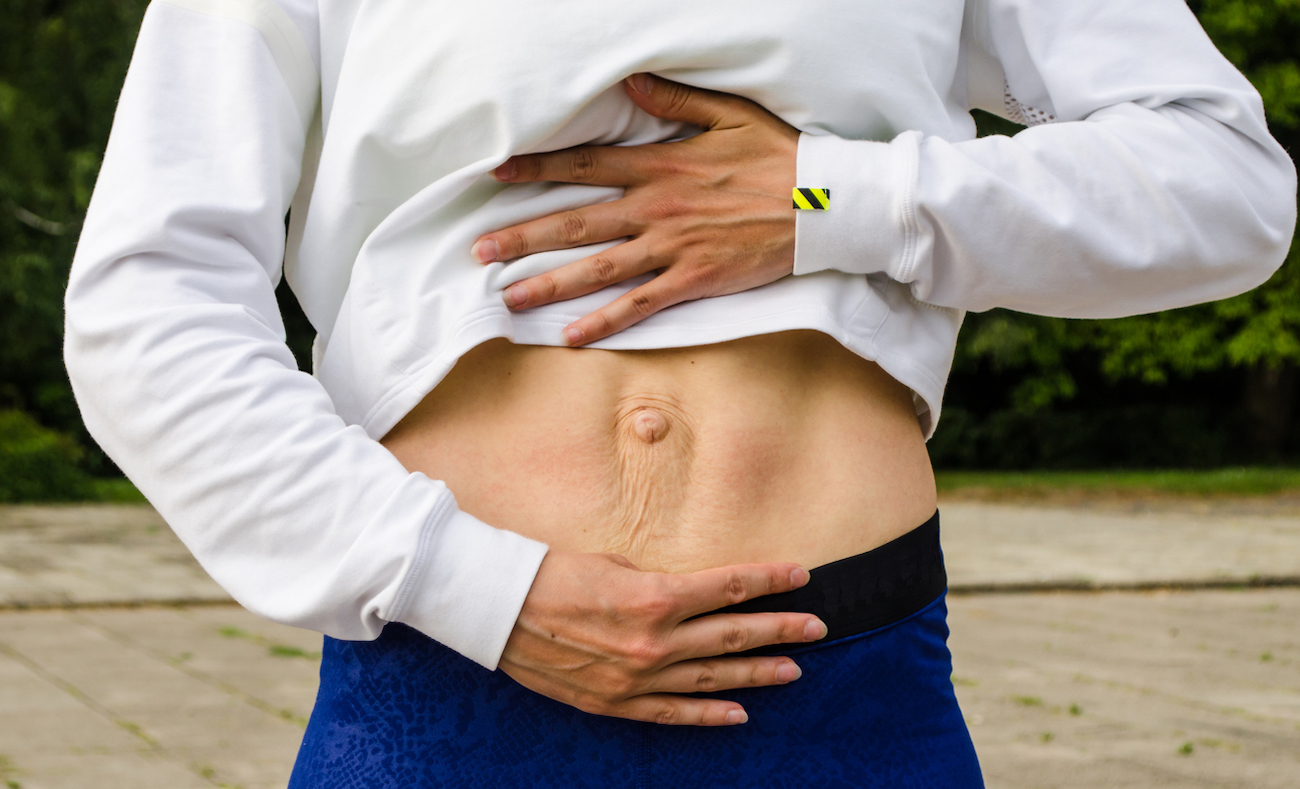
Every morning you glance down and see the same ridge through your midline. You press along your abdomen and feel that gap. When you sit-up, your belly domes instead of drawing inward. It’s frustrating—and no surprise: crunches, planks, and most “core” moves only ramp up pressure and can widen the separation rather than support healing.
As a pelvic floor physical therapist, I’ve worked with hundreds of postpartum women, and here’s the truth: closing a diastasis after a C-section requires a different plan than standard postpartum recovery. You’re not only dealing with lengthened muscles—you’re also healing surgical disruption to the fascia that binds those muscles together.
In this post, I’ll show you exactly how to approach diastasis healing after a C-section: what your tissues actually need to close the gap, why C-section recovery is fundamentally different from vaginal delivery, and the specific, breath-led strategies that reconnect your core from the inside out. Your body isn’t broken—she just needs the right input.
What is Diastasis Recti and Do I Have One?
Diastasis recti is a widening of the midline where your rectus abdominis (“six-pack”) muscles meet. The connective tissue between them, the linea alba, stretches during pregnancy to make space for your baby. After birth, that tissue is meant to recoil and transmit tension again so the two sides approximate.
After a C-section, you’re asking the linea alba to recover while your abdominal fascia heals from surgical entry. That added fascial disruption changes the plan: you don’t just “strengthen abs”. You restore tension and load transfer through the fascia first, then bring the system back online reflexively.
You might have a diastasis if:
-
Your belly domes or bulges when you do core exercises, sit up from lying down, cough, or strain during bowel movements
-
You can feel a gap between your abdominal muscles when you press your fingers along the midline of your belly
-
Your belly still looks pregnant even though you’ve lost the baby weight
-
You notice a persistent lower belly “pooch” that doesn’t change no matter how many crunches you do
-
Your core feels weak or unstable, making lifting, carrying, or everyday activities feel harder than they should
Why C-Section Makes Diastasis Healing More Complex
During a C-section, surgeons move through several layers to deliver your baby: skin, fascia, separated abdominal muscles, the peritoneum, and the uterine wall. As these layers heal, scar tissue forms. That scarring changes how your fascia glides and how your abdominal muscles can activate and coordinate.
The fascia between your abdominal muscles is the key player in diastasis recovery. This white connective tissue (the linea alba) needs to shrink and strengthen to bring the muscles back toward center. After a C-section, you’re working with:
-
Disrupted fascia that was entered during surgery and is now remodeling with scar tissue.
-
Altered muscle activation because normal nerve signaling to the deep core was interrupted.
-
Internal adhesions that can limit glide, circulation, and efficient load transfer.
-
An extended healing timeline because you’re recovering from both pregnancy and surgical trauma.
Bottom line: the timeline and strategy after a C-section are different from a vaginal delivery. Your tissues need adequate time and the right inputs before adding targeted diastasis work. When you honor that process - prioritizing breath, gentle fascial mobility, and reflexive core re-coordination first - closing the gap becomes realistic and sustainable.
A General Timeline for Your C-Section Healing
Before targeted diastasis work, your surgical site needs to be strong enough to handle the exercises that close the gap. Here's a quick overview of a safe, symptom-led C-section healing timeline:
Weeks 0–6: Foundations & Tissue Calm
-
Gentle breathing (no breath holds), decompression breathing, light mobility, short walks.
-
Goal: reduce pressure, restore circulation, protect the incision.
-
Skip diastasis-specific drills for now.
Weeks 6–12: Early Reconnection
-
Begin gentle bodyweight movements synced to breath.
-
Introduce basic hypopressive work (without apnea) to restore reflexive core support.
-
Unplanned C-section with hours of pushing? Honor a longer window, often closer to 12 weeks, before adding this phase.
Week 12+ : Progressive Diastasis Protocol
-
Add hypopressive training with breath holds (apnea).
-
Layer in targeted eccentric abdominal work and progressive core drills.
-
Continue a minimum of 2–3 months for durable change.
The bottom-line: listen to your body. Slower, steady progress is still progress, and it protects you from setbacks. When you lead with breath, fascia, and reflexive coordination, you’ll close the gap more safely and sustainably.
A Comprehensive Approach to Healing Diastasis After C-Section
Once you reach the right point in your personal recovery timeline, true healing asks for more than a handful of exercises. It asks for inputs that help your fascia rehydrate, your pressure system rebalance, and your core relearn its reflexes. This is the integrated path I guide women through inside The Core Recovery Method®.
Hydration and nutrition. The tissue that must remodel to close your gap is fascia. Fascia needs water and building blocks to shrink and strengthen. Aim for at least half your body weight in ounces of water each day, and consider adding minerals to improve absorption into connective tissue. Prioritize protein (generally 70–100 grams daily, sourced from animals, plants, shakes, or collagen) to supply the amino acids your body uses to lay down new, well-organized collagen. Include healthy fats like avocado, olive oil, coconut oil, ghee, or macadamia nuts to support tissue hydration and repair. When your fascia is nourished and hydrated, it can regain tension and begin to hold you in again.
Bowel and bladder health. Constipation and “just in case” bathroom habits quietly spike abdominal pressure and can hold a diastasis open. Support easy, regular elimination with steady hydration, abundant vegetables, and fiber such as psyllium when needed. Use a squatty potty and never push or strain. For the bladder, avoid hovering, don’t bear down to initiate flow, and respond to true urges rather than holding for long stretches. Less straining means less downward pressure on your healing midline.
Safe exercises at the right time. When your incision and fascia are ready, targeted movement becomes a cornerstone. Hypopressive training is my first choice for diastasis recovery because it reduces intra-abdominal pressure, lifts the organs, recruits the deep core reflexively, and tightens the linea alba. Think of it as re-booting your internal support system so your belly narrows from the inside out. Pair this with purposeful glute strengthening; strong glutes optimize pelvic alignment and unload your abdominal fascia so it can remodel instead of compensate. Finally, refine posture and breath throughout the day. A ribcage that expands fully and a pelvis that is stacked, not tucked, create the mechanical stimulus your fascia needs while eccentric abdominal work teaches the wall to lengthen, load, and recoil with integrity.
When hydration, elimination, breath, posture, glute strength, and hypopressive work come together, you stop fighting your body and start working with her design. That is when the gap closes more easily, your waistline reshapes, and your core feels responsive and steady again.
What to Avoid While Healing Diastasis After C-Section
Just as important as what to do is what to skip. Anything that spikes intra-abdominal pressure, forces the belly to dome, or asks your core to “muscle through” before it’s ready will keep the gap open and irritate healing fascia.
Exercises to Avoid (for now)
-
Standard crunches/sit-ups, jackknifes, bicycle crunches. These train doming, not support.
-
Long planks or hard variations. Wait until your linea alba can create tension without bulging.
-
Double-leg lifts, V-ups, toes-to-bar. These create big load with poor pressure control.
-
Heavy lifting before you pass a cough test. If a cough makes you bulge, heavy lifts will too.
-
High-impact work (running, jumping) until your core handles impact without symptoms.
-
Anything that causes doming or coning through the midline - this is your stop sign.
-
Breath-holding/“bracing” through effort (Valsalva). This causes pressure to go down and out into healing tissue.
Daily Habits That Quietly Delay Healing
-
Straining on the toilet. Use water + minerals, fiber, a squatty posture, and never push.
-
Holding your breath during everyday tasks (lifting a car seat, standing from the floor).
-
Getting out of bed like a sit-up. Always roll to your side, then press up.
-
Chronic slouching or a tucked pelvis. These postures stack pressure forward into the gap.
-
Heavy or asymmetrical carries far from your body (overloaded purses, toddlers on one hip).
-
Constant “sucking in.” This teaches shallow chest breathing, increases pressure and keeps the core disconnected.
-
Restrictive waist trainers/corsets can block rib expansion and worsen pressure.
-
Dehydration and constipation cycles. Both increase strain on the linea alba.
-
Coughing/sneezing in a slouched position. Try to lean forward with a neutral spine.
Red Flags to Pause and Regress
-
Midline doming/coning
-
Pelvic pressure/heaviness
-
Leaking, back pain, or incision pulling
-
These are your body’s way of saying, “Too much, too soon.” Scale back, reset your breath, and re-stack your posture.
Quick “swap this for that”
-
Swap crunches → hypopressive breathing + gentle eccentric ab work.
-
Swap planks → quadruped decompression breathing
-
Swap sit-up bed exits → side-lying roll-to-sit.
-
Swap heavy carries → two lighter loads held close.
Bottom line: if it bulges your midline, spikes pressure, or triggers symptoms, it’s not building integrity yet. Protect the tissues, restore pressure management with breath and rib mobility, then layer load when your core can reflexively hold you.
Healing a Diastasis After C-Section Takes Time
Your fascia needs about 12 weeks just to regain baseline tensile strength, and full closure typically takes months of steady, smart work. I know that can feel slow when you’re eager for change, but honoring your body’s real timeline is how you get durable results. Your system heals fastest when it feels safe, supported, and unhurried.
You are not broken. Your diastasis isn’t permanent. Your body is designed to recover. She just needs the right inputs, consistently.
Women who see the best outcomes tend to:
-
Respect the timeline, instead of rushing and re-irritating tissue.
-
Stay consistent with hydration, protein, and daily habits that support fascia.
-
Practice hypopressive breathing and targeted drills regularly (short, frequent sessions win).
-
Seek guidance when unsure how to progress (so form and load match your stage).
Keep showing up. Small, repeatable steps compound—and that’s exactly how your linea alba remodels, your core reconnects, and your belly flattens with ease.
When the Right Inputs Click:
After her first baby, Rhea spent nearly a year trying other programs and her diastasis wouldn’t budge. After her second, she chose a different path. One month into The Core Recovery Method®, her core started reconnecting - fast - because she finally gave her body the right inputs: breath-led coordination, fascia support, and reflexive activation.
Here’s what she had to say about her results:
“If you have been second guessing buying this program, let this be your sign to get it! I am currently 3 months postpartum with my second baby and I am SPEECHLESS by my progress. In ONE MONTH I went from a 3 finger ab separation to zero! This program is like no other. I tried many other programs after my first baby…but after almost a year with the other programs I was not able to close my diastasis. This program healed my diastasis recti along with many other issues - sciatica, lower back pain, urinary urgency, hip stabilization problems, and pelvic floor pain.
On top of it, Dr. Angie is very responsive and takes her clients progress and questions very seriously! At the same time she makes you feel listened to and important. And we all know that’s hard to find virtually. So look no further, if you have been wanting to recover your core - this method is for you!”
- Rhea S.
Getting the Support You Need for C-Section Diastasis Recovery
It’s normal to wonder: “Am I ready to start?” “Is this safe for my surgical timeline?” “Why am I still having these symptoms?” “How do I know if I’m progressing, or pushing too hard?” You don’t have to guess.
The Core Recovery Method® gives you the guidance, structure, and support to heal for the long term. Here’s what’s inside:
-
Clear timelines that match your surgery. Whether your C-section was planned or unplanned, you’ll follow phase-specific progressions that respect tissue healing.
-
Step-by-step hypopressive training (video based). Exact body positioning, breath coordination, and common fixes so you feel confident from day one.
-
Diastasis-specific protocols. We address both the stretched abdominal wall and the surgical scar tissue and adhesions that influence fascia and function.
-
Direct email access to me. Ask about your unique presentation and get tailored, clinical guidance when questions pop up.
-
Private community. Connect with moms walking the same C-section/diastasis path: share wins, get encouragement, and stay accountable.
-
Live monthly calls. Practice on camera, refine your technique in real time, and leave with clear next steps.
-
C-section-specific modifications. Every drill includes safety notes and options for where you are on the healing timeline, so you always know what’s appropriate now.
You bring your body’s wisdom. I’ll bring the roadmap. Together, we’ll restore coordination, rebuild support, and close the gap, safely, effectively and permanently.
Whether you're 6 weeks or 30 years postpartum, your diastasis can close.
You grew a human being. You recovered from surgery. Your body has already proven she knows how to heal from incredible things! She just needs the right support at the right time. And most importantly, patience with the process.
If you're ready to heal your diastasis after C-section with a clear protocol designed specifically for surgical recovery, join The Core Recovery Method®. You'll get the exact step-by-step process I use with my private clients to close your diastasis for good.
Your body isn't broken. She's just waiting for the right support to remember what she already knows how to do.

