
Gentle Post C-Section Core Exercises to Rebuild Strength

Part One: Letting Go of C-Section Guilt During Postpartum Recovery
Part Two: When to Safely Begin Exercising After a C-Section
Part Three: Healing Diastasis Recti After a C-Section Delivery
Part Four: Gentle Post C-Section Core Exercises to Rebuild Strength
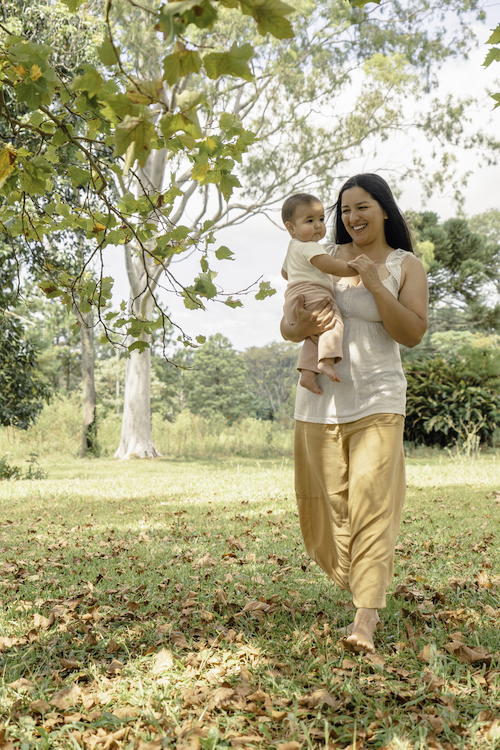
That post partum ab workout video you found on YouTube that promises to "rebuild your core in just 10 minutes a day" might not have safe post c-section core exercises. If you’re feeling guilty for not jumping back into your regular workout routine as soon as you wanted, know that your healing timeline needs to be modified. Those crunches, planks, and traditional ab work will only increase pressure in your abdomen exactly when your healing tissues need the opposite.
Most women who get back into a workout routine too soon after giving birth end up with worsening diastasis, pelvic floor dysfunction, or chronic core weakness that takes years to fix. This is even more important when healing from a C-section because your surgical recovery needs gentle, specific exercises that rebuild strength from the inside out. In this post, I'm breaking down exactly which core exercises are safe after C-section, why breathwork is your foundation, and how to progress without risking setbacks.
Why Standard Core Exercises Fail After C-Section
During a C-section, surgeons cut through multiple layers of tissue to deliver your baby. Your fascia, abdominal muscles, and all the structures that create core stability were disrupted. Now they're healing back together, but they're not functioning the way they did before.
When you do standard ab exercises like crunches or planks, you create increased pressure in your abdomen. This pressure has to go somewhere. If your core muscles aren't yet strong enough to manage that pressure, it goes through your healing fascia, your organs, and your pelvic floor instead of being absorbed by your muscles. As a result, your diastasis gets worse instead of closing, your pelvic floor weakens, and your symptoms increase instead of improving.
Standard core exercises also teach your muscles to work in isolation, when this isn’t how they naturally function in everyday life. Your core muscles need to work together as a coordinated unit, reflexively activating with every breath and movement throughout your day.
This is why breathwork becomes the foundation of rebuilding core strength after C-section. When you train your core muscles to activate properly with your breath, they learn to support you automatically, without conscious effort.
Knowing When You're Ready for Core Work
Before you start any core exercises, you need to understand where you are in your C-section recovery timeline. Pushing too hard too soon creates setbacks that take months to heal..
The first 6 weeks after C-section are about protecting your healing incision. You're not doing traditional core exercises yet. You're focusing on gentle breathing exercises, light stretching, and short walks.
Around 6-12 weeks post C-section (for planned C-sections), you can begin introducing hypopressive breathing without breath holds. For unplanned C-sections with hours of pushing, you may need to stay in the gentle breathing phase longer.
Around 12 weeks post C-section, once your fascia has reached adequate healing, you can progress to the full hypopressive protocol including breath holds. Continue this training for at least 2-3 more months.
Once you pass the cough test (your abs pull in reflexively when you cough instead of pushing out), you're ready to add higher-impact activities and more traditional exercises.
But remember: everyone's timeline is different. If you had an unplanned C-section, complications during delivery, or ongoing symptoms, your timeline may be longer.
Your Cough Test Indicates Your Readiness for Core Exercises
Before progressing to new exercises or activities, check your cough test regularly. This simple test tells you if your core muscles can manage increased abdominal pressure.
Place one hand at midline and one lower belly. Cough firmly.
- If your abdominal wall draws in and stays flat (no doming), you’re managing pressure well - proceed, but progress in small steps.
- If you see/feel doming, bulging, or downward pressure, your system isn’t coordinating yet. Return to decompression/hypopressive breath, pelvic floor recoil, posture stacking, and scar mobility until the cough stays flat.
This test is more reliable than the calendar. Your body will tell you when she's ready for more.
The Foundation: Decompression Breathing
Decompression breathing is the single most important exercise for rebuilding core strength after C-section. This breathing technique reduces pressure in your abdomen, decompresses your spine, and teaches your core muscles to activate reflexively.
Here's what makes decompression breathing so effective:
- Reduces abdominal pressure instead of increasing it like crunches and planks
- Lifts your pelvic organs back to their optimal position
- Activates your deep core muscles (transverse abdominis and pelvic floor) without conscious effort
- Decompresses your spine which reduces back pain
- Creates space in your abdomen for optimal organ function and digestion
You can practice decompression breathing anywhere, anytime. While you're walking. During stretching or gentle yoga. While playing with your kids. This makes it perfect for busy moms who don't have time to set aside for lengthy workout sessions.
Making Movement Safe With Breath
Walking, yoga, Pilates, and stretching can all support your C-section recovery when done correctly. But the cues you often hear in these classes - "tuck your tail," "close your ribs," "pull your belly button to your spine" - can actually create or worsen diastasis after C-section. These cues create rigid bracing patterns that increase pressure in your abdomen instead of teaching your core to function naturally.
The key to making these activities safe is practicing decompression breathing while you move. When you coordinate your breath with movement properly, your core muscles activate reflexively to support you. You're building strength without conscious effort or rigid bracing.
Here's how to apply this:
During walking: Practice decompression breathing as you walk. This turns a simple walk into a powerful core-strengthening session.
During stretching: Breathe properly through each stretch. This protects your healing fascia and prevents creating downward pressure.
During yoga or Pilates: Replace cueing like "tuck your tail" with decompression breathing. This keeps your core engaged properly without creating dysfunction.
The breathing is what makes the movement therapeutic. Without proper breathing, even gentle exercises can create problems.
Modifying Based on Your Delivery Experience
Your recovery timeline and exercise progression needs to match your specific delivery experience.
Planned C-Section
If you had a planned C-section without labor, your pelvic floor likely has less damage. You can typically follow the standard timeline with gentle breathing for weeks 0-6, hypopressives without apnea for weeks 6-12, full hypopressive protocol at week 12+, and higher impact activities at 6 months+.
Unplanned C-Section
If you had an unplanned C-section after hours of pushing, you're recovering from both surgical trauma and significant pelvic floor strain. Your timeline will likely be longer with gentle breathing and decompression work for weeks 0-12, beginning hypopressives without apnea at weeks 12+, and continuing gradual progression based on symptoms.
The key is listening to your body and watching for symptoms. If you experience leaking, pressure, pain, or heaviness when you progress to a new exercise, that's your body telling you she needs more time in the previous phase.
Exercises to Skip During Recovery
Understanding what to avoid during C-section recovery is just as important as knowing which exercises to do:
Skip these until your cough test is negative:
- Standard crunches or sit-ups
- Planks (front, side, or modified)
- High-impact movements like jumping or running
- Heavy lifting or loaded exercises
- Any exercise that causes your belly to dome or bulge
Skip these breathing patterns:
- Holding your breath during exertion
- Bearing down or pushing
- Forceful exhalation that creates rigid bracing
The Real Core Work Happens With Your Breath
You don't need hours at the gym, expensive equipment, or complicated exercise routines to support your post partum body. I know you want to get rid of the lower belly pooch and feel confident and strong again.
And it may seem counterintuitive, but the most effective core work you can do after a C-section happens with your breath. When you practice decompression breathing consistently, your core muscles learn to support you automatically with every breath you take.
The biggest challenge with rebuilding core strength after C-section isn't the exercises themselves. It's knowing when to start, how to progress safely, what modifications you need for your specific situation, and having someone check your form to make sure you're doing things correctly.
Inside The Core Recovery Method®, you get:
Complete hypopressive training protocols with video demonstrations showing exactly how to breathe and position your body.
Progressive timelines designed specifically for C-section recovery, so you know when to move to the next phase.
Decompression breathing techniques you can practice anywhere, anytime.
Direct communication with me via email for questions about your individual recovery.
Monthly live group calls where you can practice exercises and get immediate feedback on your form.
Modifications based on your delivery type so whether you had a planned or unplanned C-section, you have the right protocol.
Access to our private community where you can connect with other moms rebuilding core strength after C-sections.
You'll know exactly which exercises are safe at each phase of your recovery, how to tell when you're ready to progress, and what to do if symptoms pop up.
When my client Marit came to me at the start of her first pregnancy, she was facing it without the core foundation she needed and dealing with chronic bloating, exhaustion, and uncertainty about how her body would handle the physical demands of pregnancy and beyond.
Since joining The Core Recovery Method®, she has moved through pregnancy, postpartum, and life with a newborn and toddler with strength and confidence. The training methods she learned are transforming how she breathes, moves, holds and lifts her children, and shows up in her body as a mother.
“Angie, you have deeply transformed my health and my life and overall well-being. Not only has the bloating gone completely - which is a true wonder in itself, since I’ve tried so so much to get rid of it for those 14 years before training with you. I feel so much better, full of energy.
And the timing could not have been better, right at the start of my first pregnancy, your training and tips and uplifting words have carried me through the pregnancy and have given me the means to face all the challenges that come with being pregnant, postpartum & having a newborn, carrying a toddler all day long…
The exercises that felt so exhausting and daunting in the beginning, are now fun and I look forward to doing my hypopressive breathing every morning. Your training has transformed my posture throughout the day, the way I breathe, the way I walk, the way I hold and lift my child… I used to have severe pain while menstruating, now there is no pain at all!. And I could go on and on. All I want to say is: thank you.”
-Marit
Your Core Can Be Strong Again
You recovered from surgical delivery. You're healing from pregnancy. Your body has already proven she knows how to heal from incredible things! She just needs breathwork that reduces pressure, lifts your organs, and teaches your muscles to support you reflexively. When you give your body this foundation, strength rebuilds naturally.
If you're ready to rebuild core strength after C-section with exercises that actually work for surgical recovery, join The Core Recovery Method®. You'll get the exact step-by-step protocol I use with my private clients to restore core function after surgical delivery.
Your core isn't broken. She just needs the right approach to remember what she already knows how to do.

