
How to Treat an Umbilical Hernia Postpartum
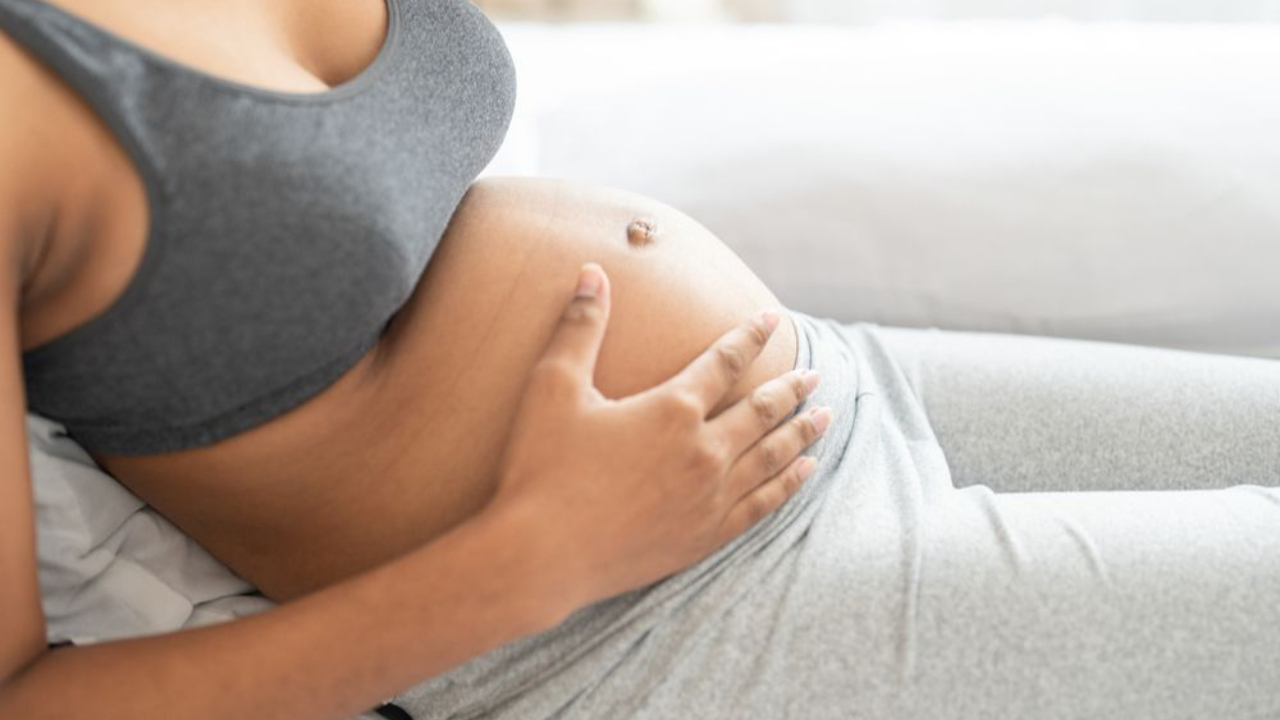
Many women leave their postpartum checkup with not one diagnosis, but two:
A diastasis. And an umbilical hernia.
Sometimes the diastasis is expected, and the hernia is the surprise. Other times, both feel unexpected.
Either way, the questions are the same:
Can I still exercise?
Can I avoid surgery?
Can this actually heal?
The answer is yes to all of it.
And yes, you can absolutely still do The Core Recovery Method®. In fact, this is exactly what it was designed for.
But healing only happens when you understand what created these conditions in the first place.
An umbilical hernia and diastasis are not two separate problems requiring two separate solutions. They are two expressions of the same underlying issue: a pressure system that has not been restored.
And when that system is addressed, both conditions can begin to respond.
What is an Umbilical Hernia and Why Did it Happen?
For ten months, your growing baby creates sustained, progressive pressure on your abdominal wall from the inside.
Your linea alba — the band of connective tissue running vertically down the center of your abdomen — stretches and widens to accommodate this.
Every pregnancy produces some degree of diastasis.
The abdominal wall must adapt to make room for the baby. This is normal. What is not expected is for that separation to persist.
When the pressure system is not restored postpartum, the linea alba remains under load without the support it needs to recover. The diastasis doesn’t fully resolve. And the umbilical region, which is already under sustained pressure throughout pregnancy, becomes more vulnerable.
Over time, that pressure can begin to push outward at the navel, creating an umbilical hernia.
You might notice a visible bulge around the navel.
Or it may feel like pressure or heaviness through the center of your abdomen becoming more noticeable with exertion, coughing, or straining.
When the system is functioning well, the diaphragm, deep core, fascia, and pelvic floor work together to distribute pressure evenly throughout the abdomen.
But when that coordination is lost, support decreases. Pressure is no longer dispersed, it becomes directed. And the body begins to look for the path of least resistance.
That pressure builds over time through a combination of factors:
- breathing patterns that drive pressure downward instead of distributing it
- reduced fascial elasticity following pregnancy
- returning too quickly to exercises that increase intra-abdominal pressure
- chronic straining during elimination
- postural and breathing patterns that allow pressure to remain unregulated postpartum
Over time, something has to give. And the hernia is where the system reaches its limit.
Do You Need Surgery for an Umbilical Hernia?
Surgery is often the standard recommendation for an umbilical hernia. And in some situations, it is absolutely necessary.
If a hernia becomes:
- incarcerated, meaning the tissue is trapped and cannot return to the abdominal cavity
- strangulated, meaning blood supply is compromised
- or rapidly worsening with significant pain or functional limitation
Then surgery is not optional. It is the appropriate and necessary intervention.
But this is the part that often gets overlooked: Surgery addresses the tissue. It does not address the system. It closes the opening in the abdominal wall, but it does not restore the conditions that caused that opening to develop in the first place. And if the pressure system remains unchanged, the same forces are still acting on the body.
This is why hernias can come back.
Not because your body failed— but because the system was never fully restored.
How to Treat an Umbilical Hernia Postpartum
Whether you’re trying to avoid surgery, preparing for it, or healing afterward, the approach remains the same: Restore the pressure system. Retrain the body to manage intra-abdominal pressure the way it was designed to.
Healing is not simply about closing a defect.
It is about restoring the environment that allows the linea alba and surrounding abdominal wall to function with integrity under load.
This is the foundation of The Core Recovery Method® — a system designed to shift healing from temporary repair to long-term resilience through restored mechanics.
Hydration and Nutrition
The tissue we are working to rehabilitate — the linea alba — is connective tissue. And connective tissue requires hydration to function and recover.
Hydration is not incidental to this process.
It is a prerequisite.
A dehydrated linea alba cannot remodel, cannot regain tensile integrity, and cannot effectively support the abdominal wall.
Adequate water intake, along with minerals, protein, and healthy fats, directly supports fascial healing and diastasis recovery.
Self Abdominal Massage
The abdominal wall and underlying organs are intimately connected through the fascial system.
When tension accumulates from pregnancy, postpartum posture, chronic pressure, or surgery, the fascia can become restricted.
When this happens, the body loses its ability to:
- distribute pressure evenly across the midline
- absorb and transmit force efficiently
- support the core from the inside out
Gentle, targeted abdominal massage helps to:
- release superficial and deep fascial restriction around the linea alba and umbilical region
- improve circulation and lymphatic flow
- restore mobility between the abdominal wall and underlying organs
- reduce localized areas of pressure concentration
This is one of the first ways we restore space within the system so the body can begin responding again instead of holding tension.
Hypopressive Training
Hypopressive training is a central component of The Core Recovery Method® and one of the most effective approaches for postpartum recovery.
Unlike traditional core exercises, it does not increase intra-abdominal pressure. It reduces it.
Through specific posture and breath patterns, hypopressive training facilitates:
- upward movement of the diaphragm
- expansion of the rib cage
- a reduction of downward force on the abdominal wall and linea alba
At the same time, it stimulates a reflexive activation of the deep core system, including the pelvic floor and transverse abdominis, without gripping, bracing, or force.
This creates a mechanical environment where both a diastasis and an umbilical hernia can begin to heal simultaneously.
Breath Work
The diaphragm is the primary regulator of pressure within the abdomen and pelvis.
Every breath you take creates a shift in intra-abdominal pressure. If that breath is consistently directed downward, pressure becomes concentrated at the midline.
Postpartum, this means repeated loading of the linea alba with every breath. This is one of the most overlooked reasons these conditions develop and persist. And why returning to exercise without restoring breathing mechanics often makes both the hernia and diastasis worse.
When breath is restored, we re-establish:
- three-dimensional diaphragm movement
- rib cage expansion and recoil
- coordinated timing between the diaphragm, abdominal wall, and pelvic floor
- balanced pressure distribution throughout the core
This is where the system begins to change. Less pressure. Less strain. More support, without force.
Postural Training
Posture is not just alignment. It is a primary driver of how pressure is generated and distributed throughout the body.
Postpartum posture is often compromised. Feeding positions, carrying your baby, sleep deprivation, and a recovering core all contribute to patterns that increase pressure at the midline.
When posture shifts, even subtly, the entire system adapts.
A collapsed rib cage, rounded upper back, or a pelvis held in a fixed position alters how the diaphragm moves, how the abdominal wall responds, and how pressure is distributed.
Instead of being dispersed, pressure becomes directed, often into the linea alba. Postural training is not about holding a rigid position.
It is about restoring an environment where the body can function as it was designed to.
This includes:
- a spine that feels lengthened and responsive
- a rib cage that can expand and remain open
- a pelvis that can adapt rather than be held
- a sense of space through the waist and abdomen
When posture supports breath, and breath regulates pressure, the load on the linea alba decreases.
And this is where true healing begins.

What Hernia Recovery Looks Like Day to Day
Treating an umbilical hernia is not something that happens only during surgery.
Recovery is shaped by how your body breathes, moves, and manages pressure throughout the entire day.
Pressure is present with every breath, every step, every time you pick up your baby, and every moment your body responds to effort.
When the pressure system is not functioning well, these everyday moments become repeated sources of strain on the linea alba and the umbilical region.
But small, consistent shifts can completely change that environment.
This is what that begins to look like in daily life:
Breathing into the rib cage, not the belly
When breath is directed downward without lateral rib cage expansion, pressure is driven vertically into the linea alba.
Restoring three-dimensional rib cage expansion allows pressure to disperse, reducing load on the midline and umbilical region.
Maintaining rib cage integrity on the exhale
When the ribs collapse downward during exhalation, the abdominal cavity compresses and pressure increases at the midline.
Maintaining rib cage support allows the diaphragm to ascend while preserving balanced pressure distribution.
Avoiding exercises that increase midline pressure
Crunches, sit-ups, leg lowering, boat pose, and similar movements bring the rib cage closer to the pelvis, concentrating force directly at the linea alba.
These movements increase strain on the abdominal wall and work against healing both the hernia and the diastasis.
They should be avoided until core function is restored, regardless of what you were told at your six-week clearance.
Restoring efficient elimination patterns
Chronic straining during bowel movements is one of the most significant and overlooked sources of pressure loading postpartum.
Supporting proper positioning, maintaining hydration, and reducing constipation all decrease unnecessary strain on the abdominal wall and midline.
These shifts may seem small. Mechanically, they are not. They change how force moves through your body. They reduce cumulative pressure over time. And they create the conditions your body needs to heal and to prevent recurrence.
What Long-Term Healing Looks Like Postpartum
The Core Recovery Method® offers a comprehensive approach to healing an umbilical hernia by addressing the system that created it — not just the symptom.
An umbilical hernia is not simply a structural issue.
It reflects how your body is managing pressure, distributing force, and maintaining support through the linea alba and the integrated core system.
And in most postpartum cases, diastasis is part of that same pattern. When the pressure system is restored, both can begin to resolve.
So whether your goal is to:
- avoid surgery
- support healing alongside it
- close your diastasis and prevent recurrence
- or return to full strength after a repair
The focus remains the same:
- Restore pressure regulation.
- Rebuild fascial resilience.
- Retrain the body to support itself from within.
Because real healing is not about managing symptoms. It is about creating a body that can adapt, respond, and meet the demands placed on it without breaking down.

