
The Best Pelvic Floor Exercises for Uterine Prolapse Isn’t What You’ve Been Told
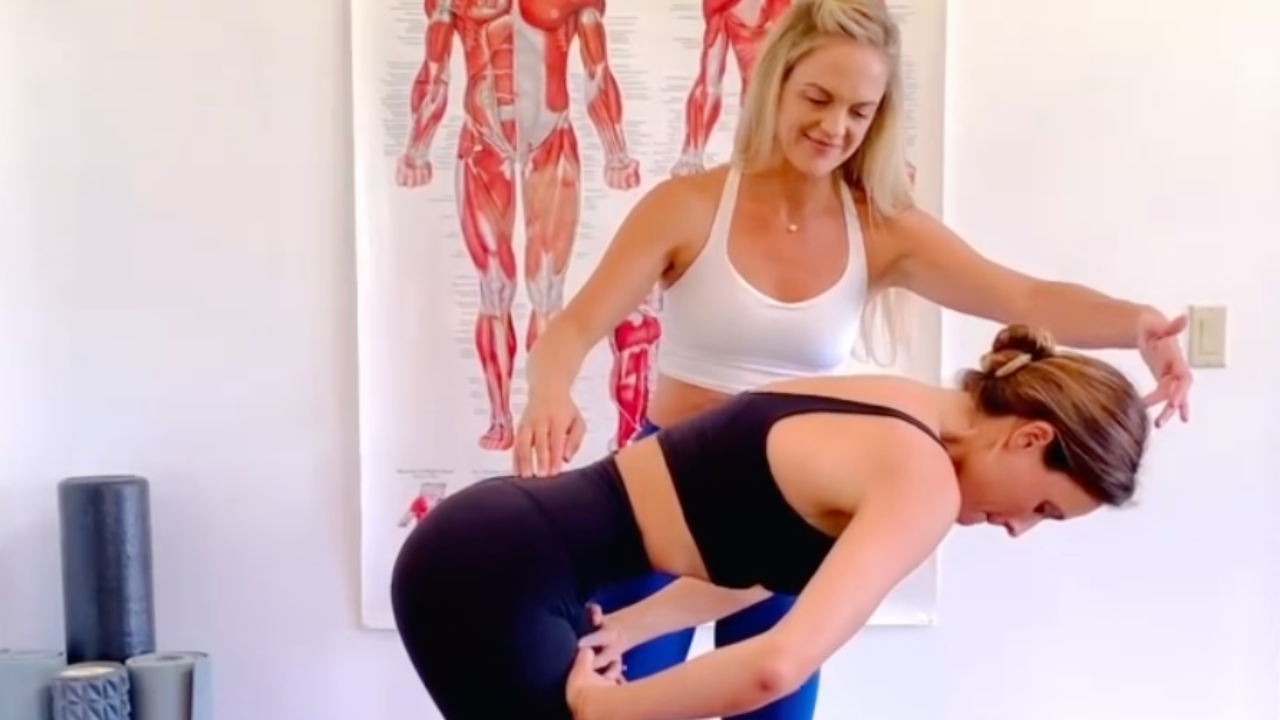
If you’ve been diagnosed with uterine prolapse, you may have been told to avoid exercise altogether—or stick to “gentle” movement that leaves you feeling fragile, restricted, and afraid of making things worse.
Maybe you’ve tried Kegels.
Maybe you’ve followed pelvic floor exercises online.
Maybe you’ve done everything you were told would help—yet you still feel heaviness, pressure, or that unsettling sensation that something is falling down.
Maybe you plan your day around your symptoms.
Maybe you avoid long walks, workouts, lifting your children, or standing for too long because you’re worried you’ll feel that familiar heaviness by the end of the day.
Maybe you’ve even started to wonder if this is simply what life looks like now.
It’s not.
Most women have never been told that prolapse is not simply a problem of weakness.
It’s often a problem of pressure.
And until that pressure is addressed, strengthening alone can reinforce the very patterns contributing to the prolapse in the first place.
There is a specific type of exercise that doesn’t push down on the pelvic floor—but instead helps create lift, decompression, and support from within.
That heavy, dragging feeling in your pelvis…
The pressure that worsens throughout the day…
The fear that movement or exercise could make your prolapse worse…
These symptoms are common, but they are not something you simply have to live with forever.
Your body was designed with an incredible capacity to heal when given the right support.
This is the exact approach I teach inside The Core Recovery Method® — and it has helped hundreds of thousands of women restore support, reduce symptoms, and feel strong, confident, and at home in their bodies again.
Why Traditional Pelvic Floor Exercises Like Kegels Can Make Uterine Prolapse Worse
If you’ve been faithfully doing Kegels or “pelvic floor strengthening” exercises but your uterine prolapse symptoms still feel the same — or worse — you are not alone.
In fact, this is one of the most common frustrations I hear from women.
“I’ve been doing my pelvic floor exercises every day.”
“I’ve gotten stronger.”
“So why do I still feel pressure, heaviness, or like something is falling down?”
The answer is simple: Uterine prolapse is not primarily a strength problem.
It’s a pressure problem.
Most women are taught that the uterus is supported by the pelvic floor muscles alone. But your uterus is actually supported by an entire pressure system that includes your diaphragm, abdominal wall, rib cage, spine, fascia, posture, and pelvic floor.
The pelvic floor is only one piece of that system.
If the body is constantly managing excessive downward pressure from poor breathing mechanics, chronic bracing, constipation, posture changes, pregnancy, or high-impact exercise, simply squeezing the pelvic floor harder does not solve the problem.
In many cases, it can actually make symptoms worse.
Imagine trying to hold up a ceiling while someone continues stacking heavier and heavier boxes on top of it.
The answer isn’t to keep squeezing harder. The answer is to remove the pressure.
This is why so many women tell me:
“I’ve been doing Kegels for months and nothing has changed.”
Or worse:
“I think my symptoms are getting worse.”
Because strengthening the pelvic floor without addressing pressure is like strengthening a foundation while continuing to push down on it from above.
Until pressure is managed correctly, the pelvic floor remains stuck in a cycle of compensation.
And compensation is not the same thing as support.
Most women are never taught how pressure actually works inside the body.
They’re taught how to strengthen. How to squeeze. How to engage their core. But very few women are taught that every breath they take creates pressure within the abdominal cavity—and that pressure directly influences the position of the pelvic organs.
This is where many traditional pelvic floor exercises fall short.
When the diaphragm isn’t moving well, the rib cage is restricted, the abdomen is chronically braced, or the body has adapted to years of compensation patterns, exercises intended to strengthen the core can unintentionally increase downward pressure. Crunches, planks, heavy lifting, running, aggressive abdominal bracing, and even certain pelvic floor exercises can all become problematic when the body lacks the ability to manage pressure efficiently.
The result is often frustrating.
A woman works hard. She follows the advice she’s been given. She becomes stronger. Yet the heaviness remains.
The bulging remains. The pressure returns every afternoon. She starts wondering if she’s doing something wrong.
But the issue isn’t that she isn’t trying hard enough. It’s that the system she’s trying to strengthen is still compressed.
When pressure continually moves downward, the pelvic floor is forced into a compensatory role. The muscles work harder. The tissues become more guarded. The body begins relying on tension instead of support. And symptoms such as heaviness, pelvic pressure, bladder leakage, low back discomfort, and a feeling of “falling out” often persist despite a woman’s best efforts.
This is why I believe uterine prolapse should never be viewed as simply a pelvic floor weakness.
It is a whole-body pressure management issue.
And healing begins when we stop asking the pelvic floor to carry the burden alone.
What the body truly needs is a way to create space. Space for the diaphragm to move. Space for the organs to be supported. Space for pressure to distribute throughout the system instead of collapsing downward into the pelvis.
When that happens, the pelvic floor no longer has to grip, brace, or strain to compensate. It can finally begin doing what it was designed to do. This is exactly why hypopressive training can be so transformative for women with uterine prolapse.
Why Hypopressive Training is the Best Pelvic Floor Exercise for Uterine Prolapse
Hypopressive training is unlike any traditional pelvic floor exercise.
Instead of asking the pelvic floor to work harder, it helps restore the environment the pelvic floor needs to function well in the first place.
This distinction is everything.
Most exercises prescribed for uterine prolapse focus on strengthening. But strengthening alone doesn’t solve a pressure problem. In fact, when the body is already struggling to manage pressure, many traditional exercises can unintentionally increase the very forces pushing downward on the pelvic organs.
Hypopressives work differently.
Using a specific combination of posture, breath, and decompression, hypopressive exercises help create an upward lifting effect within the body. Rather than bearing down, bracing, or squeezing, the body learns how to organize pressure more efficiently.
For many women, this is the first time they experience what true support actually feels like.
Not more effort.
Not more gripping.
Support.
As pressure begins to redistribute throughout the core, many women notice that familiar heaviness starts to lessen. The dragging sensation becomes less noticeable. Standing, walking, exercising, and moving through daily life begin to feel easier because the body is no longer constantly fighting gravity.
One of the most remarkable aspects of hypopressive training is its ability to create space. Space for the diaphragm to move. Space for the rib cage to expand. Space for the pelvic organs to sit in a more supported position.
And when the body has space, the pelvic floor no longer has to carry the burden alone.
This is where healing begins.
Because the pelvic floor was never designed to function independently. It is part of a beautifully coordinated system that includes the diaphragm, abdominal wall, fascia, spine, posture, and nervous system. Every breath you take influences this system. Every movement either reinforces support or reinforces compensation.
Hypopressive training helps restore this natural coordination.
Rather than relying on conscious squeezing throughout the day, the pelvic floor begins responding reflexively again. It learns how to support the body automatically while you walk, lift, bend, breathe, and move through daily life.
And that is what lasting support looks like.
Not a stronger squeeze.
A better system.
This is also why the benefits often extend far beyond prolapse symptoms alone. As pressure regulation improves and the body begins functioning more efficiently, many women notice improvements in bladder leaks, low back pain, posture, hip tension, abdominal strength, and their overall sense of connection to their bodies.
Because when you restore the pressure system, you don’t just change the pelvic floor.
You change the environment it lives in.
A Real Story of Healing with Stage 4 Uterine Prolapse
One of the most heartbreaking things I hear from women with uterine prolapse is:
“I feel like my only option is surgery.”
Many have been told to avoid exercise, stop doing the activities they love, wear a pessary indefinitely, or simply accept that prolapse is a normal part of aging.
But that isn’t the whole story.
The body has an incredible ability to adapt, heal, and restore function when we address the systems that created the problem in the first place.
Julia’s story is a beautiful example of what can become possible.
After being diagnosed with a Stage 4 uterine prolapse, she spent years searching for answers.
“I was diagnosed with a stage 4 uterine prolapse a few years ago. I remember clearly the progression — from no prolapse to stage 4 — and the emotional weight that came with it.
I was in denial at first. It felt overwhelming, especially at 60 years old and not wanting surgery. Where do you even begin?
I tried several protocols over time. Some helped temporarily. Some created new issues — including too much pelvic tension, which is absolutely not what you want.
Eventually, I decided to invest in The Core Recovery Method® because the approach felt structured, anatomical, and different from anything I had tried before.
After just under 7 months, I no longer needed incontinence pads. My core felt stronger. My posture improved. My hips stabilized after years of limping. My pelvic organs felt softer and less tense.
Most importantly, my uterus began staying in a higher, more supported position for longer periods of time — even during more straining daily activities like gardening and lifting. I am able to be without the pessary for most of my day and even during activities that require exertion.
The combination of protocols in The Core Recovery Method® has healed my symptoms and, more importantly, given me real hope for my future.
I only wish I had started sooner.”
- Julia
What stands out most to me about Julia’s story isn’t simply that her symptoms improved. It’s that her body stopped compensating. She didn’t spend seven months squeezing harder. She spent seven months restoring the systems that support the uterus naturally. Her breathing changed. Her posture changed. Her pressure patterns changed. Her nervous system stopped relying on tension for stability. And as the body became more organized, the pelvic organs became more supported.
This is what I want every woman with uterine prolapse to understand:
Healing isn’t about forcing the uterus back into place.
It’s about restoring the environment that allows the body to support itself again.
This is why the work inside The Core Recovery Method® focuses on breathing mechanics, pressure regulation, posture, fascia, nervous system regulation, and deep core function together.
Because the pelvic floor was never meant to do this work alone.
You Are Not Too Far Gone to Heal
One of the hardest parts of living with uterine prolapse isn’t the symptoms themselves. It’s the fear that comes with them. The fear that every workout, every walk, every lift, or every sneeze is making things worse. The fear that your body is slowly falling apart. The fear that prolapse surgery is your only option. The fear that you’ll never feel normal in your body again.
I want you to hear this:
Your symptoms are not a life sentence.
Your diagnosis is not a prediction of your future.
And your body is not broken.
She is adapting to the forces being placed upon her.
When pressure is consistently moving downward, the body compensates the best way it knows how. But compensation is not the same thing as healing.
Healing begins when we change the environment the body is operating within. When pressure is managed differently. When the diaphragm, core, posture, fascia, and pelvic floor begin working together again. When the body no longer has to rely on tension and strain to create support.
This is when women often begin to experience something they haven’t felt in a very long time: Relief. Confidence. Trust.
Not just in their pelvic floor—but in their body as a whole.
Because you deserve to feel strong when you move. You deserve to exercise without fear. You deserve to walk, lift, garden, travel, play with your children, and live your life without constantly thinking about your prolapse. You deserve to feel connected to your body again.
And most importantly, you deserve to know that healing is still possible.
Not through more force.
Not through more squeezing.
Not through trying harder.
But through restoring the system that was designed to support you all along.
You Can Heal Uterine Prolapse - and it Starts with your Breath
The body is always responding to pressure.
Every breath you take either reinforces the patterns contributing to your prolapse—or helps restore the support your body has been searching for.
That is why healing uterine prolapse doesn’t begin with squeezing harder.
It begins with breathing differently.
Inside The Core Recovery Method®, I teach women how to restore core and pelvic floor function through the same breathwork, hypopressive training, and pressure-regulation techniques that have helped thousands of women reduce prolapse symptoms and reclaim confidence in their bodies.
Together, we restore the systems that support the uterus naturally:
✨ Breathing mechanics that create lift instead of downward pressure
✨ Postural strategies that improve organ support and alignment
✨ Self-massage techniques that reduce tension and restore tissue mobility
✨ Deep core activation that strengthens from the inside out
✨ Pelvic floor function that is reflexive, supportive, and sustainable
Because healing isn’t about forcing your organs back into place. It’s about creating an environment where your body can support them naturally.
Imagine moving through your day without constantly checking for heaviness.
Imagine exercising without fear.
Imagine feeling supported when you walk, lift, garden, travel, or play with your children.
Imagine trusting your body again.
That is what becomes possible when pressure, posture, breath, and core function begin working together. Because you deserve more than symptom management. You deserve to feel strong. You deserve to feel supported. And you deserve to feel at home in your body again.
Restore support. Rebuild confidence. And help your body remember what it was designed to do.

