
Why Surgery Alone Won’t Fix an Inguinal Hernia (And What Will)
Inguinal hernias are often treated as a local problem. A weakness in the groin. A defect in the abdominal wall. Something that needs to be repaired.
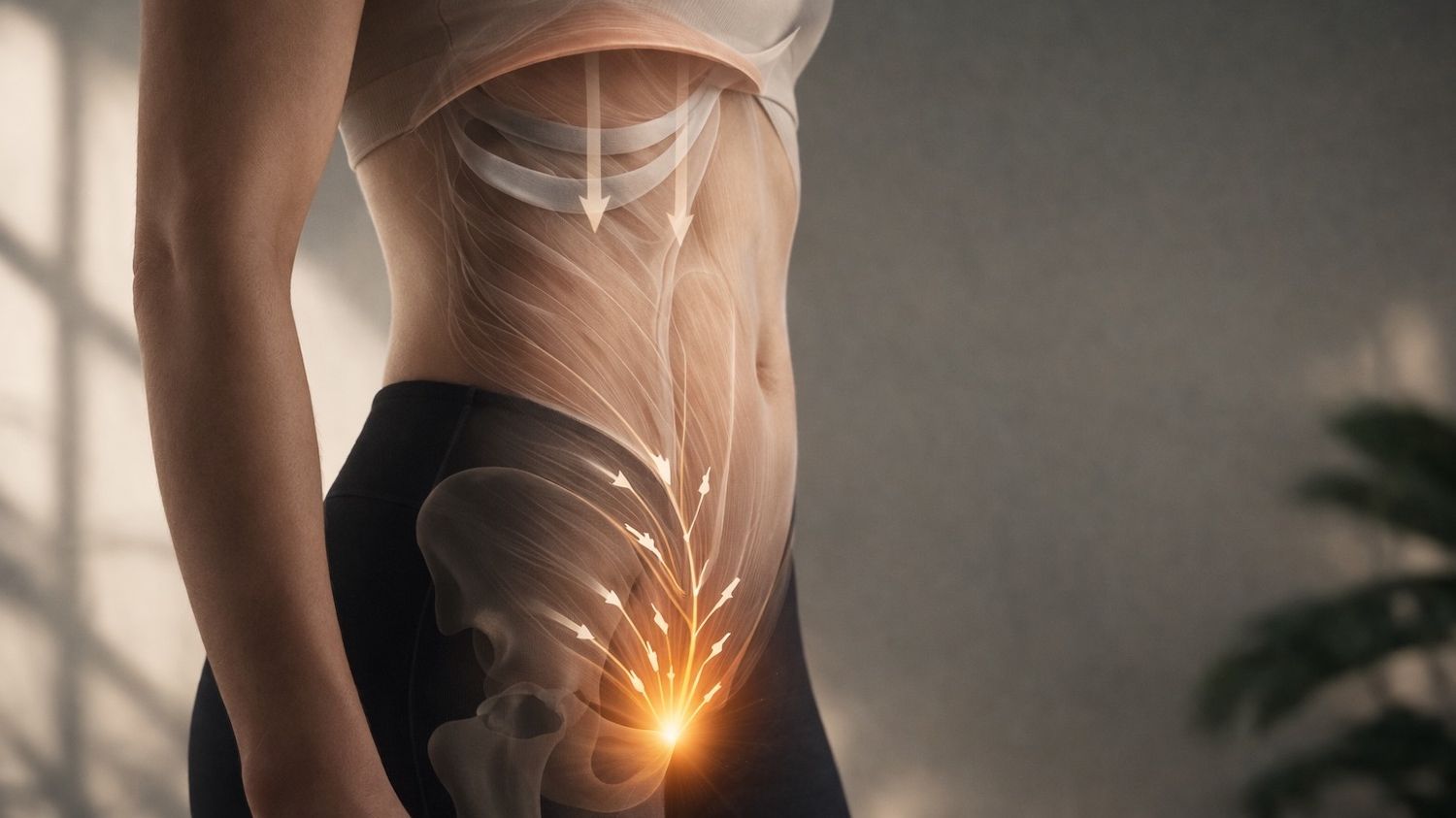
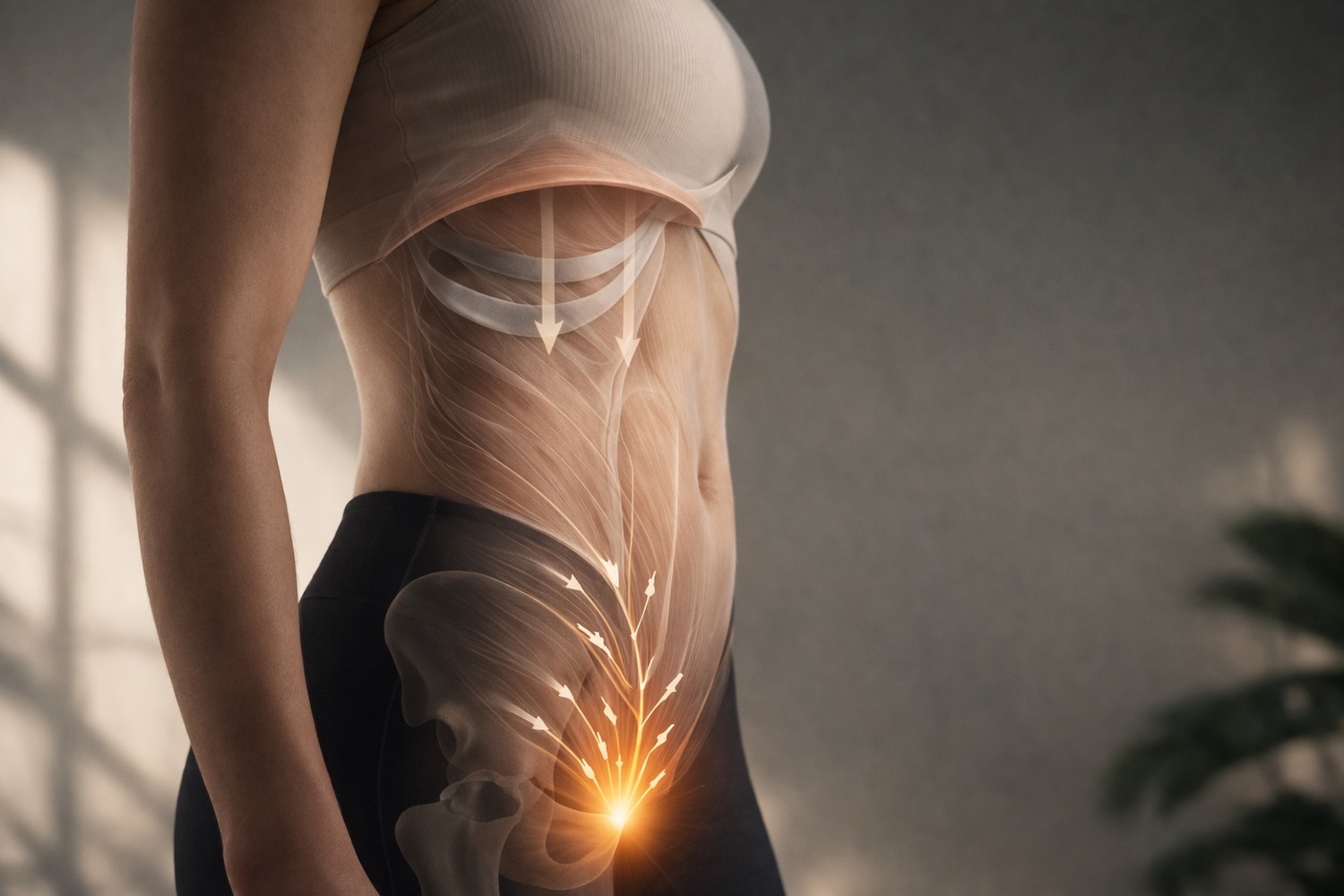
But an inguinal hernia does not begin as a structural failure. It develops when pressure within the abdominal system is no longer being managed or distributed effectively.
An inguinal hernia occurs when abdominal tissue pushes through a compromised area of the lower abdominal wall at the region of the inguinal canal.
Yes, that area is structurally more vulnerable. But vulnerability alone does not create a hernia. Load does. And more specifically — how that load is managed over time.
Because the abdominal wall does not function in isolation.
It is part of a coordinated system involving:
- the diaphragm
- the rib cage
- the deep core
- the pelvic floor
- and the fascial network that distributes force throughout the body
When that system is functioning well, pressure is dispersed. When it is not, pressure becomes concentrated. And over time, concentrated pressure will always find the path of least resistance.
In the case of an inguinal hernia, that point is often the inguinal canal.
So the question is not simply: “How do we fix the hernia?”
But rather: “Why was that area exposed to more pressure than it could manage?”
Because without restoring how pressure is generated, distributed, and absorbed through the system, the conditions that created the hernia remain. And when those conditions remain, resolution is incomplete.
What is an Inguinal Hernia and Why Did it Develop?
An inguinal hernia happens when tissue, often part of the intestine or abdominal fat, pushes through a weakened area in the lower abdominal wall, into the inguinal canal (the passage that runs into the groin).
You might notice a visible bulge. Or maybe it feels more like a dragging sensation, discomfort with movement, or pressure that builds as the day goes on.
Inguinal hernias are the most common type of hernia. They’re often talked about in men, but women experience them too, and far too often they’re missed or misunderstood.
You’ll commonly see them in:
- athletes who do a lot of kicking, pivoting, or quick direction changes
- people lifting heavy or doing manual work without proper pressure support
- men, due to the natural structure of the inguinal canal
- women, where symptoms don’t always follow the “textbook” pattern
It’s not just about who gets a hernia.
It’s about why your body allowed it to happen.
At its core, an inguinal hernia is a pressure management problem.
The inguinal canal is naturally a more vulnerable area of the abdominal wall. But your body was designed with a system to support it.
When everything is working well, your deep core, your fascia, your diaphragm, and your pelvic floor all work together to manage pressure from the inside out. They restore balance, distribute load, and protect those vulnerable spaces.
But when that system isn’t functioning the way it should…
Support decreases.
Pressure starts to build.
And your body looks for the path of least resistance.
That pressure can build over time from things like:
- breathing patterns that push pressure downward instead of distributing it
- stiffness or reduced elasticity in the fascial system
- repeated high-load movement without true core coordination
- chronic straining (like with bowel movements)
- previous surgeries that disrupted the abdominal wall
- training patterns that increase pressure without rebuilding the system underneath
Over time, something has to give.
The hernia is where your body finally says, “I can’t manage this load anymore.”
So the hernia itself isn’t actually the root problem. It’s the result of a system that’s lost its ability to manage pressure effectively.
Do You Always Need Surgery With an Inguinal Hernia?
Surgery is often the standard recommendation for an inguinal hernia. And in some situations, it’s absolutely necessary.
If a hernia becomes:
- incarcerated (the tissue is stuck and can’t move back into place)
- strangulated (blood flow is compromised)
- or rapidly worsening with significant pain or limitation
Then surgery isn’t optional. It’s the right and important next step.
But here’s the part that doesn’t get talked about enough…
Surgery addresses the tissue.
It doesn’t address the system.
Surgery closes the opening. It reinforces the abdominal wall (often with mesh). But it doesn’t restore why that opening developed in the first place.
A hernia doesn’t happen just because there was a “weak spot.” It happens because that area was repeatedly exposed to pressure your body couldn’t manage.
And if that pressure system doesn’t change… those same forces are still there.
This is where so many women (and men) feel confused or frustrated after surgery.
You did what you were told.
You had the procedure.
You gave your body time to heal.
And yet over time you might notice:
- that familiar pressure or heaviness creeping back in
- discomfort with movement or exercise
- a lack of trust in your core
- or even another hernia developing
And you start wondering, “Why is this happening again?”
From a body perspective, it actually makes sense, because the deeper issues that contributed to the hernia in the first place often haven’t been restored:
- your breath may still be pushing pressure downward instead of expanding fully
- your rib cage might still feel stiff or restricted
- your core might brace instead of responding and adapting
- your deep system may not be coordinating well under load
So even though the tissue has been repaired, the environment it lives in hasn’t changed. And that means the same pressure is still being placed on that area.
This is why hernias can come back.
Not because your body failed, but because the system was never fully supported to heal.
This is where your focus gets to shift by learning how to restore the system, so you can reclaim strength and renew the way your body handles pressure for the long term.
How to Treat an Inguinal Hernia at Home
Whether you’re trying to avoid surgery, preparing for it, or healing afterwards, the approach is the same:
We restore the pressure system.
True healing requires changing the environment that created it.
This is the foundation of The Core Recovery Method®. A system designed to shift healing from temporary repair to long-term resilience through restored mechanics.
Self Abdominal Massage
Your abdominal wall and organs are deeply connected through your fascial system. When tension builds, whether from bracing, surgery, repetitive movement, or chronic pressure, that system can become restricted.
When that happens, your body loses its ability to:
- distribute pressure evenly
- move and absorb force efficiently
- support your core from the inside out
Gentle abdominal massage helps to:
- release those restrictions
- improve circulation and fluid flow
- restore mobility between tissues
- reduce areas of pressure buildup
This is one of the first ways we begin to restore space and movement in the system so that your body can start responding again, instead of holding tension.
Hypopressive Training
Hypopressive training is a key part of The Core Recovery Method® and it’s very different from traditional “core work.” Instead of creating more pressure, it helps your body decompress from within.
Through specific posture and breath patterns, you:
- lift and reposition the diaphragm
- expand the rib cage
- reduce downward pressure on the abdominal wall and groin
At the same time, your deep core system (including your pelvic floor and transverse abdominis) activates reflexively, without force, gripping, or bracing.
This is how you begin to reclaim true core function.
Breath Work
Your breath is the foundation of your entire pressure system. Every inhale and exhale shifts pressure in your abdomen and pelvis. And if your breath is constantly pushing downward, that pressure has to go somewhere. And often, it goes straight into the groin.
This is one of the most overlooked reasons hernias develop and come back.
When we restore your breath, we restore:
- full, 360° diaphragm movement
- rib cage expansion and recoil
- coordination between your diaphragm, core, and pelvic floor
- balanced pressure throughout your system
This is where things start to feel different.
Less pressure.
Less strain.
More support, without forcing it.
This is where your body begins to renew how it functions automatically.
Postural Training
Posture isn’t just about alignment, it’s about how your body manages pressure. The way your rib cage, spine, and pelvis are positioned directly shapes how your entire core system functions.
This positioning directly influences:
- how the diaphragm moves
- how the abdominal wall responds
- how the pelvic floor receives and transfers load
- and how force is transmitted through the fascial system into the groin
When posture starts to shift—even subtly—the whole system adapts.
A collapsed rib cage, forward head position, rounded upper back, or a pelvis that’s constantly tucked or tipped… all of this changes how your body handles pressure.
Your diaphragm loses its ability to expand fully.
Your rib cage becomes more rigid.
And your core often shifts into bracing instead of responding.
So instead of pressure being distributed evenly, it gets pushed downward and outward, right into the lower abdomen and inguinal canal.
Postural training is about creating an environment where your body can function the way it was designed to again. Not by forcing “perfect posture,” but by restoring space, movement, and adaptability through your system.
This starts to look like:
- a spine that feels long, supported, and responsive
- a rib cage that can expand and stay open with your breath
- a pelvis that can move and adjust instead of being held rigid
- a sense of space and decompression through your lower abdomen and groin
When posture supports breath, and breath regulates pressure, the load on the inguinal region decreases and your body no longer has to rely on compensation.
This is where true healing begins.
What Healing Looks Like Day to Day
Healing your core isn’t just something that happens during a workout. It’s shaped by how your body breathes, moves, and manages pressure all day long.
Pressure isn’t something that only shows up when you exercise. It’s there with every breath, every step, every time you pick something up, and every moment your body has to respond to effort.
And when your system isn’t working well, all of those small, everyday moments become sources of strain, especially in the inguinal region.
Small shifts, done consistently, can completely change that environment.
This is what that starts to look like in real life:
- Breathing into the rib cage, not the belly.
If your breath is constantly driving pressure downward, that load goes straight into your lower abdomen and groin. Restoring three-dimensional rib cage expansion allows pressure to disperse, reducing the load placed on the inguinal region.
- Maintaining rib cage integrity on the exhale.
Allowing the ribs to collapse downward during exhalation compresses the abdominal cavity and increases internal pressure. Keeping the rib cage open and supported allows the diaphragm to ascend while maintaining balanced pressure distribution through the core.
- Temporarily avoiding high-pressure activities
Running, jumping, kicking, pivoting, HIIT training, heavy lifting, and traditional abdominal exercises such as crunches can significantly increase intra-abdominal pressure. Until the system is able to manage that pressure effectively, these activities reinforce the very forces that contributed to herniation. This is particularly relevant for athletes returning to sport after an inguinal hernia diagnosis or repair.
- Restoring efficient elimination patterns.
Chronic straining during bowel movements is one of the most significant and overlooked sources of pressure loading in the body. Supporting proper positioning, maintaining hydration, and reducing constipation all decrease unnecessary strain on the abdominal wall and groin.
These shifts might seem small. But they completely change how force moves through your body. They reduce the buildup of pressure over time. And they create the conditions your body needs to heal and prevent a hernia recurrence.
Restoring the System After an Inguinal Hernia Surgery
If surgery is already behind you, this work becomes even more important. While surgery repairs the tissue, it also introduces a new variable into the system: scar tissue.
Scar tissue is not inherently problematic, but it behaves differently than healthy fascia. It is denser, less elastic, and less capable of adapting to load. When it forms within the inguinal region and the surrounding abdominal wall, it can:
- restrict mobility between layers of tissue
- alter how force is transmitted through the fascia
- and disrupt the body’s ability to distribute pressure evenly
Without rehabilitation that specifically addresses fascial mobility, pressure regulation, and coordinated core function, the system remains vulnerable because the environment it exists within has not been restored.
Inside The Core Recovery Method®, we focus on helping your body rebuild strength after inguinal hernia surgery by restoring how it manages pressure, so healing feels complete, not temporary.
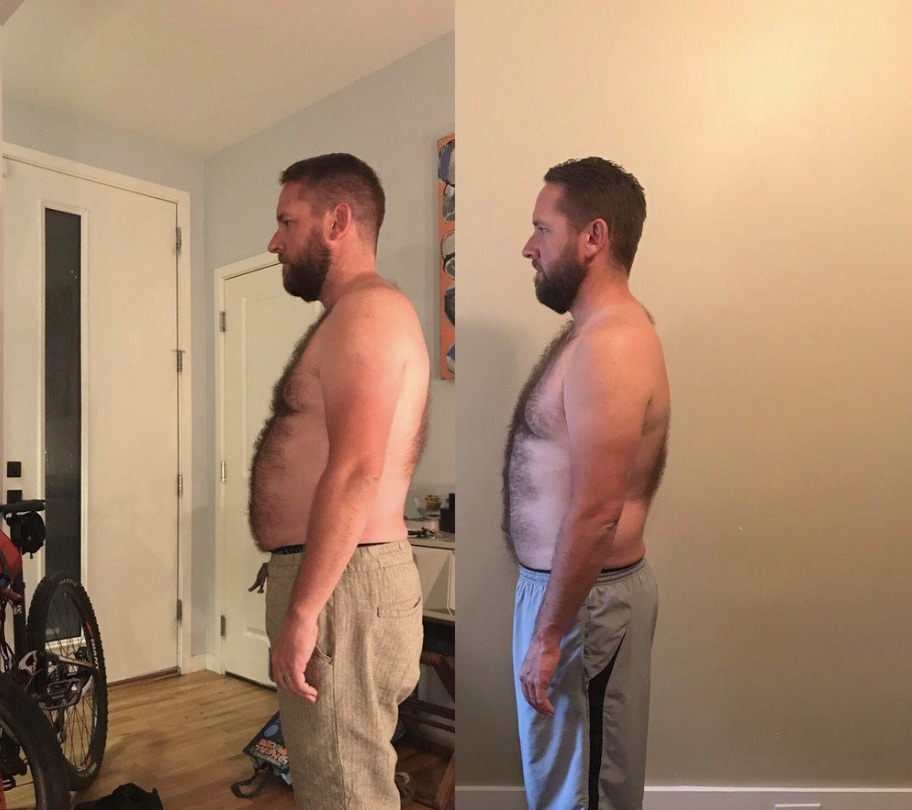
Here’s what my client Justin said about his experience:
“I had literally just came from my doctor who handed me a surgeons business card. Later that day I saw one of those commercials if your hernia surgery had gone wrong - they will win for you. I thought to myself - there is zero chance I'm going to have surgery.
I started asking around if anyone knew of a way to heal yourself naturally. All the roads led to Dr. Angie! My first impression: she was 100% engaged and I felt like she really cared about me and my recovery.
I have to say, I've done a lot of diets in my lifetime and I've been a competitive Raquetball player. At the end of the day, I still looked 20lbs overweight.
After working with Angie, my posture immediately started to completely change. Dr. Angie’s program has improved my fitness, motivation and overall health. The proof is in the pudding.”
— Justin Williams
A Long-Term Solution to Healing an Inguinal Hernia (With or Without Surgery)
The Core Recovery Method® offers a comprehensive approach to healing and preventing inguinal hernias by addressing the system that created it, not just the symptoms.
An inguinal hernia is not simply a weak spot in the groin. It’s a reflection of how your body manages pressure, distributes force, and maintains support through the integrated core system.
So whether you’re trying to:
- avoid surgery
- support healing alongside it
- return to athletic performance after repair
- or prevent recurrence after a previous procedure
The focus remains the same. Restore pressure regulation. Rebuild fascial resilience. Retrain the body to support itself from within.
Real healing isn’t about constantly managing symptoms. It’s about creating a body that can adapt, respond, and handle load, without breaking down.

