
Can Physical Therapy Heal Nerve Damage and Numbness After a C-Section?
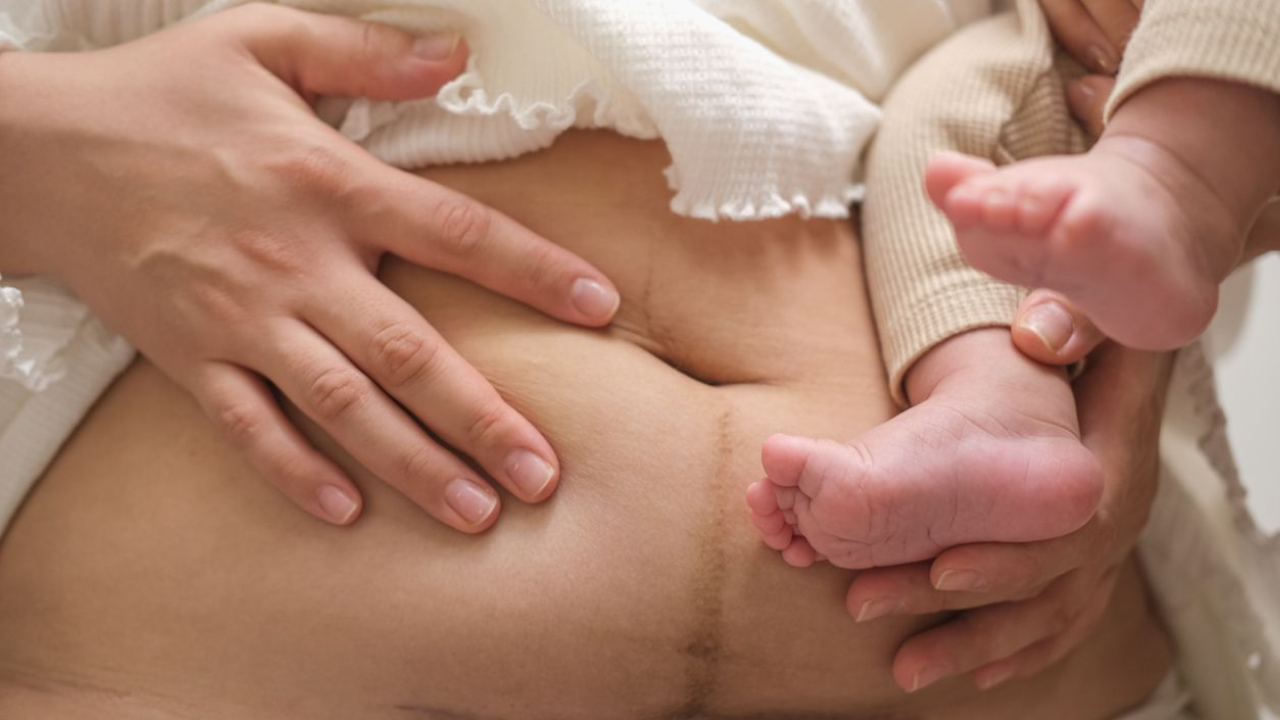
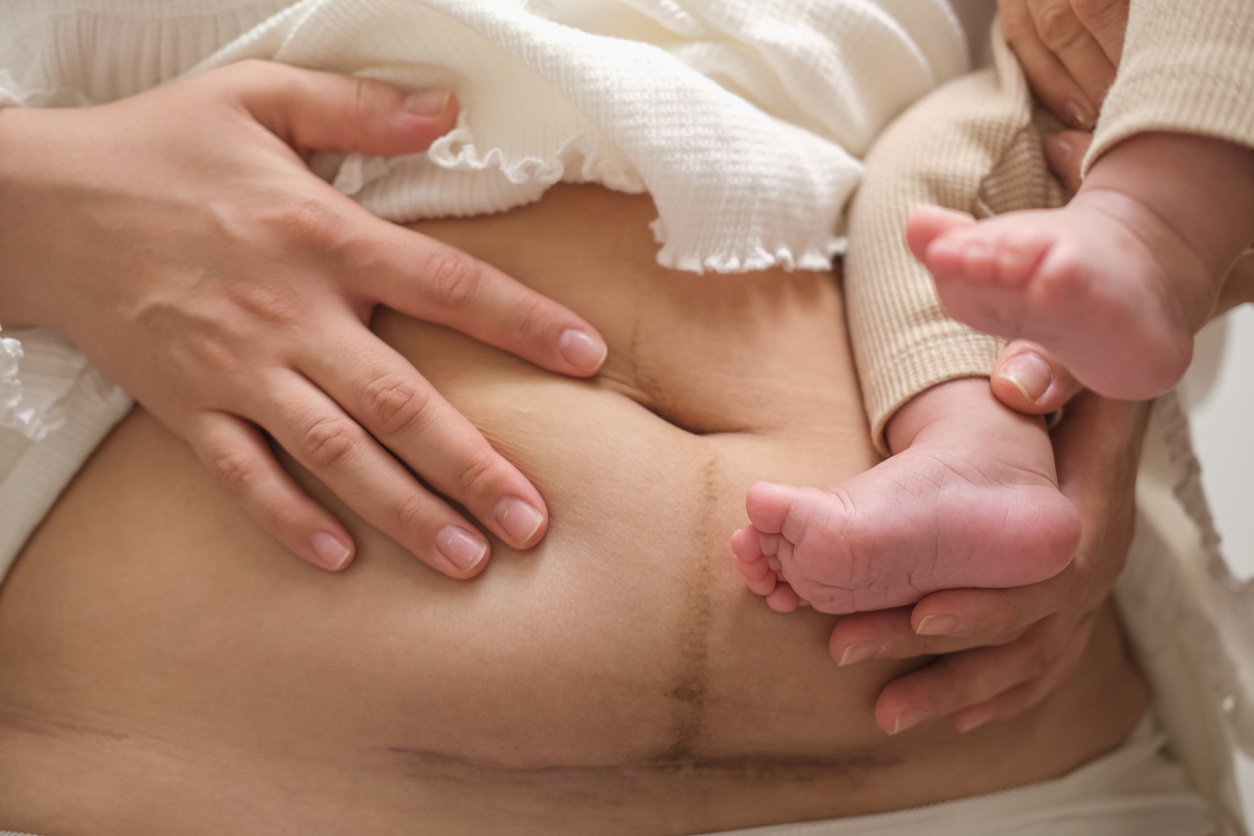
You finally hit the 6-week mark post partum. Your OB has cleared you for normal activity, but when you touch the area above your C-section scar, it still feels numb.
Maybe there’s tingling or a pins-and-needles sensation. You may still feel disconnected from your core, like it’s not quite part of your body anymore.
If you’ve been wondering whether physical therapy can help heal this type of nerve damage and numbness after a C-section, the answer is: yes. Your nervous system can heal with the right support.
One of the biggest misconceptions about postpartum healing is that skin healing equals full recovery. While your external incision may close within weeks, your fascia, nerves, and deep core continue recovering for months afterward.
As a pelvic floor physical therapist, this is one of the most common concerns I hear from moms after C-section recovery — and one of the least talked about.
The truth is that your body is already healing. She just needs the right support to reconnect and restore function.
What Happens to Your Nerves During a C-Section
A C-section is a layered surgery that moves through multiple tissues in the abdomen, including:
- Skin
- Superficial fat and fascia
- Muscles of the abdominal wall
- Peritoneum
- Uterine wall
While the superficial abdominal muscles themselves are usually separated rather than cut, surgery still cuts through the transverse abdominus and changes how the deep core coordinates afterward.
The transverse abdominis — your body’s natural corset — often loses its reflexive timing after pregnancy and surgery. The peritoneum, a thin fascia membrane lining the abdominal cavity, is also rich in nerves, which is why many women experience pulling, aching, numbness, or strange sensations during healing.
While your skin may appear healed by 6 weeks postpartum, nerve recovery is still actively happening.
Sensation commonly returns in waves:
- Tingling
- Itching
- Numb patches
- Pins-and-needles sensations
- Areas of hypersensitivity
These are often signs that nerves are regenerating and reconnecting.
Nerve healing commonly begins during weeks 2–12 postpartum and can continue well beyond that, overlapping with fascial remodeling that continues for several months.
What Numbness After a C-Section Can Feel Like
Every woman experiences recovery differently, but altered sensation after surgery is incredibly common.
You may experience:
- Numbness or a “shelf” of tissue above the scar
- Pins-and-needles sensations near the incision
- Feeling disconnected from your lower belly
- Hypersensitivity or pain with light touch
- Deep pulling or aching with movement
- Difficulty feeling your lower abs or pelvic floor activate
For some women, the area feels completely numb. For others, it feels overly sensitive. And for many moms, it’s both at different times during healing.
This can feel confusing, especially when you’ve been told everything “looks healed.” But nerves and fascia heal on a much longer timeline than skin.
Why Nerve Damage Often Doesn’t Fully Resolve on its Own
While some sensation improves naturally over time, many women continue experiencing numbness, pulling, or disconnection for months or even years after a C-section.
One major reason is scar tissue. As your body heals, scar tissue forms internally and externally. Scar tissue itself isn’t bad, but when it becomes restricted, it can affect how tissues glide, how muscles activate, and how nerves move through the area.
At the same time, the deep core system often goes partially “offline” after surgery. The diaphragm, pelvic floor, and deep abdominals are designed to work together reflexively with every breath and movement.
But after pregnancy and surgical delivery, those patterns frequently become disrupted. Without retraining, the body often compensates by:
- Bracing
- Guarding
- Avoiding the area entirely
- Overusing superficial muscles
Pressure management also matters.
If the diaphragm, pelvic floor, and deep abs aren’t coordinating well, increases in intra-abdominal pressure — like coughing, lifting, crunching, or planking — can create pulling, doming, heaviness, or stress through healing tissues.
This is why healing after a C-section requires more than simply “strengthening your core harder.”
How Physical Therapy Supports Nerve Healing After a C-Section
Physical therapy can play a major role in helping your nervous system reconnect after surgical delivery.
The goal isn’t to force healing. It’s to create the environment your body needs to heal more efficiently.
1. Scar Tissue Mobilization
Scar mobility work helps restore normal movement between tissue layers.
Gentle scar work can:
- Reduce the “stuck” feeling around the scar
- Improve tissue mobility
- Support healthier nerve movement
- Improve how the abdominal wall activates
This work is always progressive and begins only when the body is ready.
2. Decompression Breathing and Hypopressive Training
One of the biggest missing pieces in postpartum recovery is pressure management.
Decompression breathing and hypopressive techniques help:
- Reduce excess intra-abdominal pressure
- Restore diaphragm and pelvic floor coordination
- Improve reflexive deep core activation
- Improve circulation
- Heal the fascia that was cut
Instead of bracing harder, the body learns to coordinate automatically again.
3. Nervous System Downshifting
After C-section recovery, many women unconsciously stay in protective guarding patterns around the abdomen and pelvis. Nervous system downshifting helps reduce those protective responses so the body can move and heal with less tension and fear.
4. Desensitization Work
For women experiencing hypersensitivity or discomfort near the incision, desensitization techniques help retrain how the nervous system processes touch. This often begins around the incision and not directly on the scar initially.
5. Reflexive Core Reactivation
Most postpartum women have been taught to “tighten” or aggressively strengthen their core. But after a C-section, healing is less about forcing contraction and more about restoring timing.
Your deep core is designed to activate reflexively with breath and movement. When those patterns are retrained, pressure becomes better managed and movement begins to feel supported again.
What the Timeline for Nerve Healing Looks Like
Nerve healing after a C-section is gradual. For many women, sensation returns little by little over weeks and months.
Weeks 2–12+
This is when active nerve regeneration is commonly occurring. You may notice tingling, itching, numb patches changing, or increased awareness around the scar. These are often normal signs that nerves are reconnecting.
Months 3–6+
Fascia continues remodeling for months after surgery, which is why scar mobility, pressure management, and deep core coordination remain critical aspects of healing long after the incision appears healed externally.
Progress is Rarely Linear
Healing can fluctuate based on sleep, stress, hydration, constipation, scar mobility, and exercise intensity.
One of my favorite readiness checks is the cough test.
Place one hand at midline and one lower belly. Cough firmly.
- If your abdominal wall draws in and stays flat (no doming), you’re managing pressure well - proceed, but progress in small steps.
- If you see/feel doming, bulging, or downward pressure, your system isn’t coordinating yet. Continue working in decompression breathing, hypopressive training, posture stacking, and scar mobility until the cough stays flat.
This test is more reliable than the calendar. Your body will tell you when she's ready for more.
When to Seek Support
Consider working with a pelvic floor physical therapist if:
- Numbness is worsening instead of improving
- Your scar feels hard, raised, or stuck
- You feel disconnected from your lower core or pelvic floor
- You experience leaking, pressure, heaviness, or doming alongside numbness
- Pulling sensations limit movement or exercise
- Pain or hypersensitivity persists long term
Being “cleared” for exercise post partum does not always mean your body feels functional again.
How Breathwork Supports Nerve Healing and Core Recovery
You don't need hours at the gym, expensive equipment, or complicated exercise routines to support your postpartum body. And while it may seem counterintuitive, some of the most effective healing work you can do after a C-section happens with your breath.
When you practice decompression breathing consistently, you improve pressure management, circulation, and reflexive deep core coordination — all of which help create a better healing environment for scar tissue, nerves, and core recovery.
The biggest challenge after a C-section is knowing how to support healing in a way that helps your body feel safe, connected, and functional again.
Healing becomes easier when you understand:
- When your body is ready for the next step
- How to progress without increasing pressure or irritation
- What modifications support healing instead of slowing it down
- How to recognize when symptoms mean “slow down”
- Whether your deep core is coordinating reflexively again
Inside The Core Recovery Method®, you get:
- Complete hypopressive training protocols with guided video demonstrations
- Progressive timelines designed specifically for C-section recovery
- Decompression breathing techniques you can practice anywhere
- Direct support for individualized recovery questions
- Monthly live group calls for coaching and form feedback
- Modifications for both planned and unplanned C-sections
- Access to a supportive community of postpartum moms rebuilding their core safely
You’ll know exactly which exercises are appropriate during each phase of healing, how to progress without setbacks, and what to do if symptoms pop up along the way.
Here’s what one client shared about her experience inside The Core Recovery Method®:
“Again, I wanted to say thank you for your incredible physical therapy support. My body felt better three months post partum than it did one year post partum with my first. I have been telling everyone I know about your work.”
- Crystal
Your Core isn’t Broken — She’s Relearning
You recovered from surgical delivery. You're healing from pregnancy. Your body has already proven she knows how to heal from incredible things!
With the right support, your body can absolutely reconnect, reorganize, and regain function after a C-section. When you give your body this foundation, strength and function rebuilds naturally.
If you're ready to heal nerve damage and numbness after a C-section, join The Core Recovery Method®. You'll get the exact step-by-step protocol I use with my private clients to restore core function after surgical delivery.
Your core isn't broken. She just needs the right approach to remember what she already knows how to do.

